Appalachian sanctuary
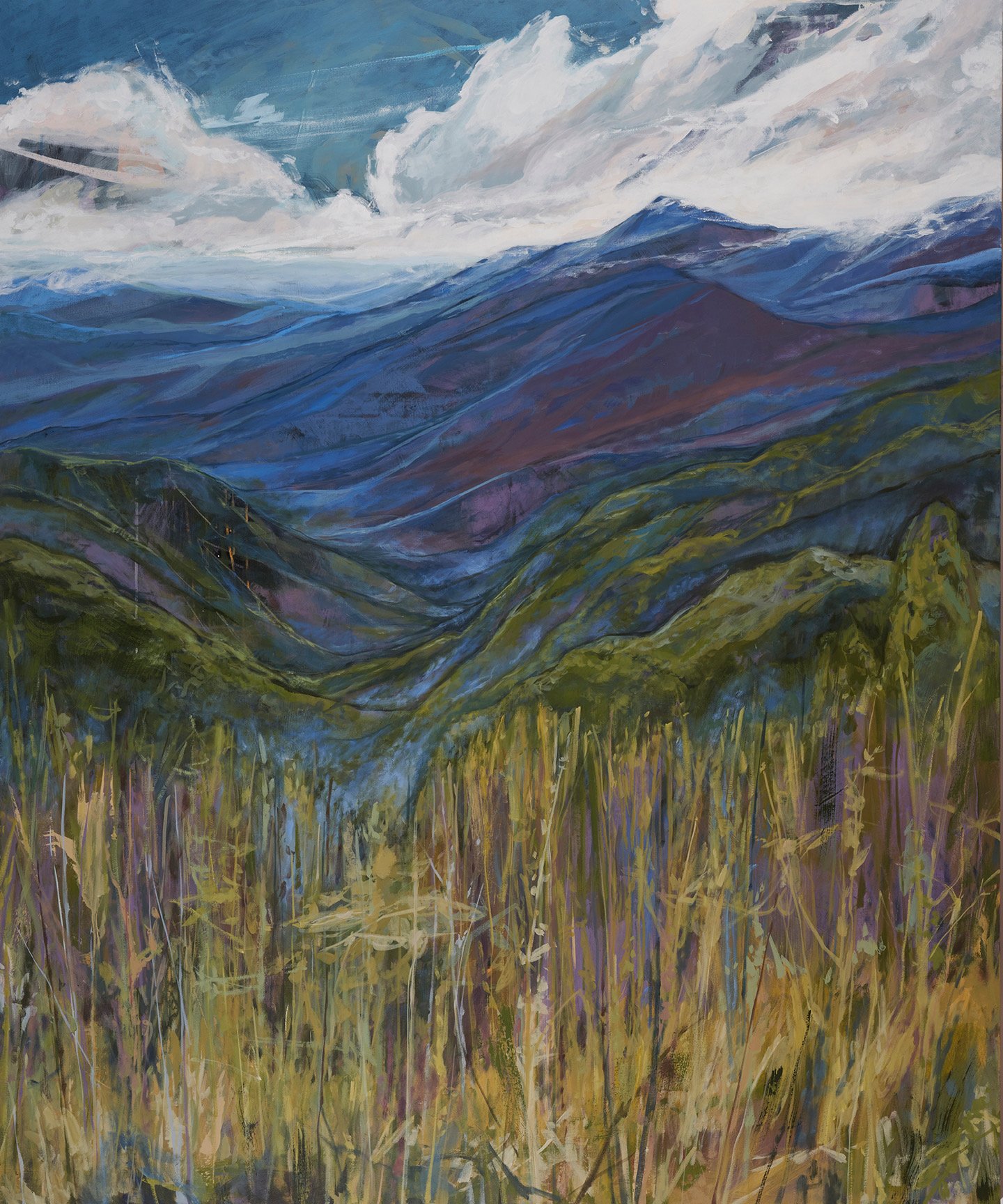
Mountain Break , Acrylic on canvas, 72 × 60 inches
A benefit exhibition bringing awareness to the Southern Appalachian Highlands Conservancy and the lands it protects. All 16 paintings and accompanying writings were inspired by time spent exploring SAHC’s preserves.
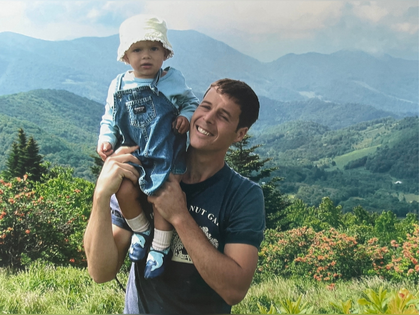
Dedicated to my friend
William Hamilton
William served as SAHC's first Farmland Protection Director from 2005 to 2017, working with landowners to permanently protect approximately 6,700 acres of farms and working forests in the Southern Appalachians.

Artist Statement
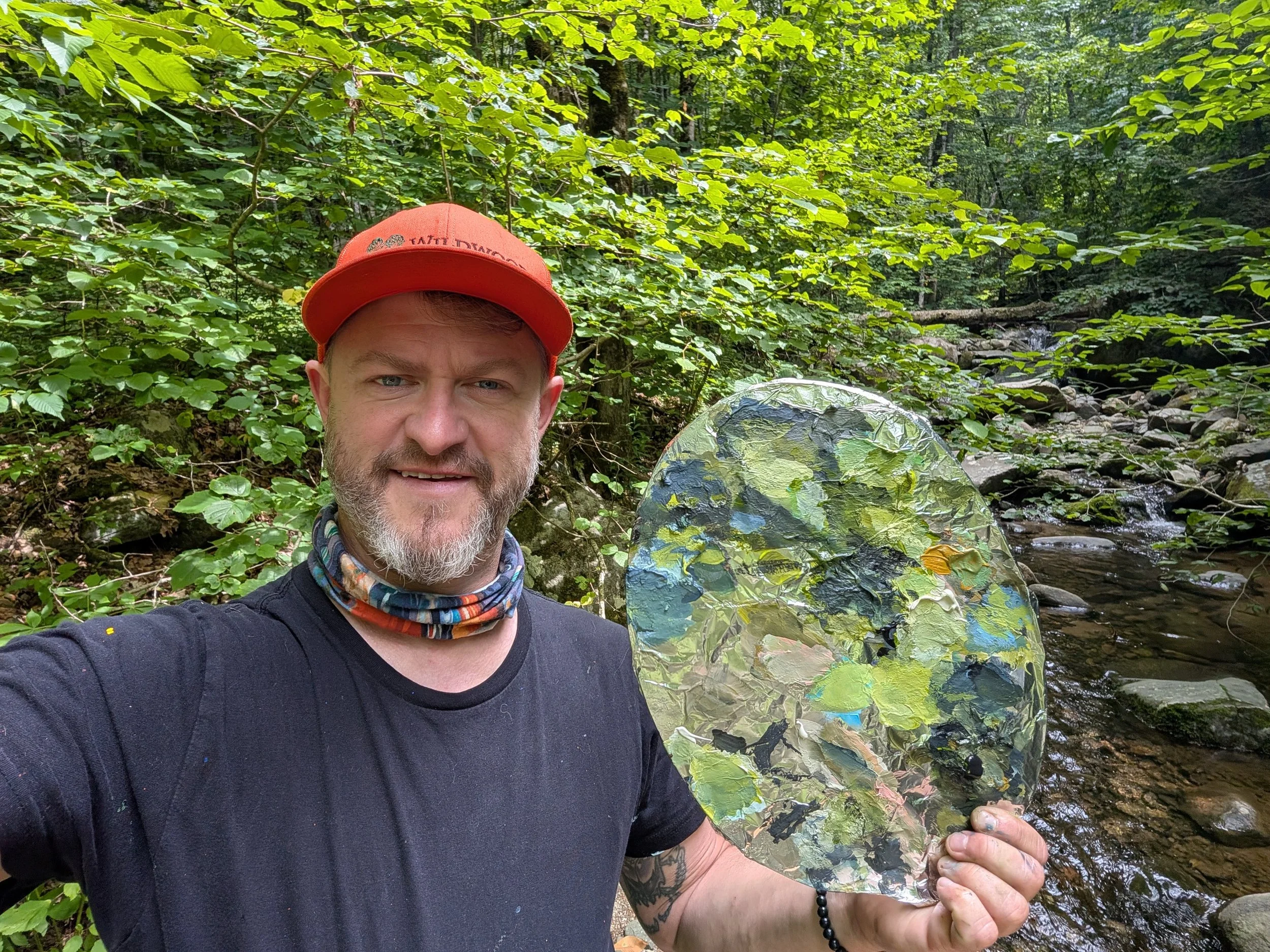
I was introduced to the Southern Appalachian Highlands Conservancy through a dear friend, the late William Hamilton of the Hickory Nut Gap community in Fairview, North Carolina. This organization has a long and effective history of preserving natural habitats through a thoughtful and strategic conservation process.
Drawn by the alignment between my work and the mission of the Southern Appalachian Highlands Conservancy, I sought to form a partnership with this organization for a project. Those initial conversations evolved into the idea for a series of paintings inspired by my personal experiences while visiting these landscapes. Through this body of work, I seek to capture the beauty and abundant inspiration of the Southern Appalachian region, with a particular focus on landscapes that have been thoughtfully preserved or carefully re-established by the SAHC.
I have titled this painting series Appalachian Sanctuary because I have come to experience the forests and streams of these highlands as a refuge from the pace and pressures of the modern world. While I grew up with an appreciation for woods and wildlife, I have recently found that time spent in nature is not only restorative, but increasingly essential.
Through this work, I hope to remind viewers that our most important investment lies in our natural places. The land and waters of these mountains sustain us, physically, emotionally, and spiritually. They are not separate from us, but the source from which our well-being is continually drawn.
This series is intended to reflect that relationship and to honor the ongoing efforts of those who protect these landscapes. My hope is that Appalachian Sanctuary resonates with both locals and visitors, and inspires us to protect and preserve the natural world.
~Jeremy Russell
The Project
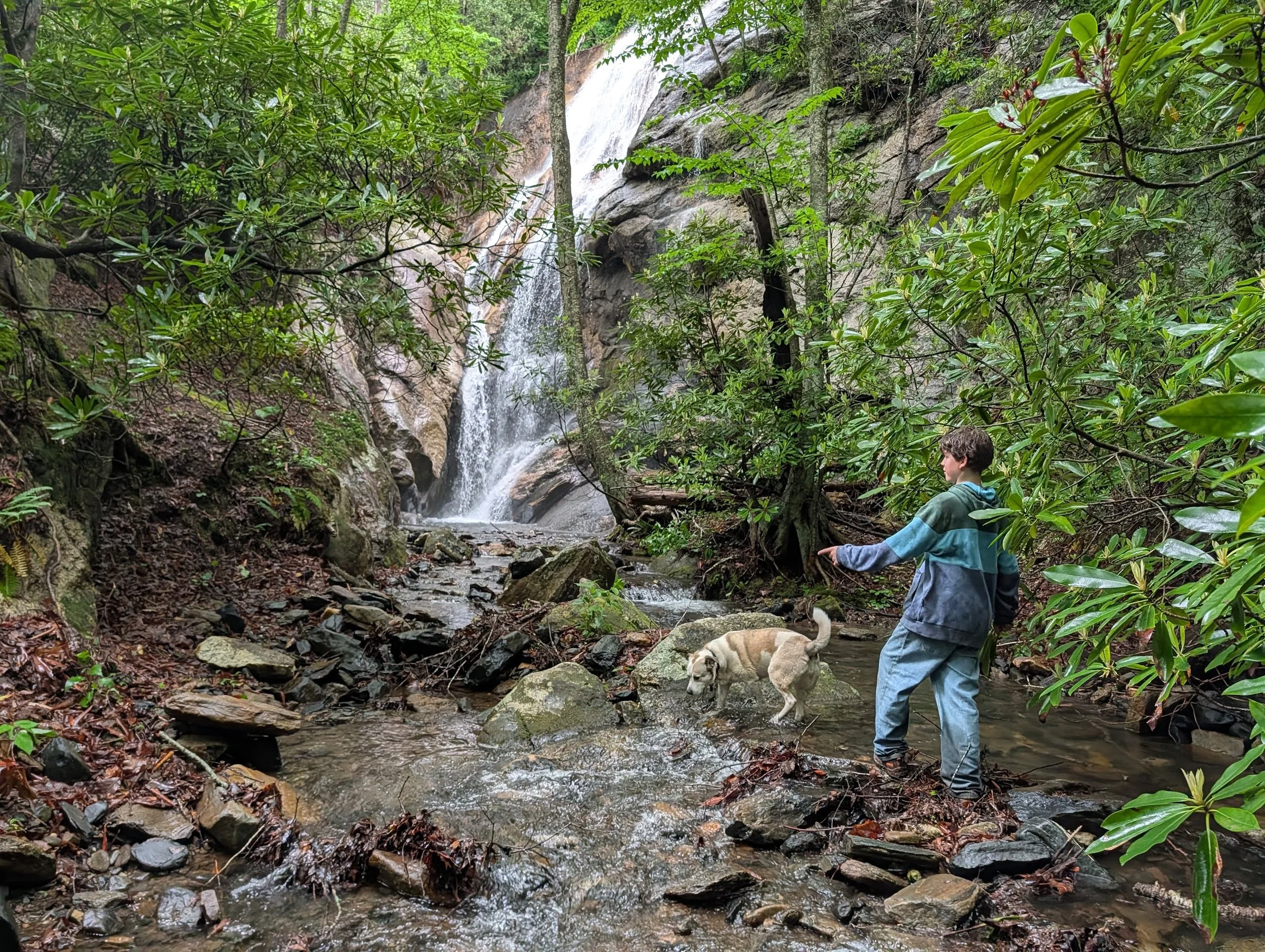
In the summer of 2026, artist Jeremy Russell, his wife Jamie, and their two youngest children, Henry and Shiloh, visited six of the Southern Appalachian Highland Conservancy's most cherished preserves. Their goal was to explore and understand these remarkable places, to discover what makes them unique and priceless, to better understand the work of land conservation, and to share those discoveries with the public in the hope of magnifying the Conservancy's mission.
The journey culminated in a series of paintings exhibited at the Russell & Armstrong Gallery in Asheville, North Carolina. Accompanying the exhibition is this small book, which brings together the paintings, photographs, and writings inspired by those places.
Every landscape stayed with Jeremy after he left. Long after the hikes were over, the colors, sounds, history, and moments from these places continued to surface in the studio. Some became paintings. Others became words.
Most of the writings in these pages are Jeremy's personal reflections, created alongside the paintings as a way of continuing the process of observing, remembering, and understanding these protected lands. Additional essays and reflections from invited contributors provide context and further perspectives on the places featured throughout the book.
Bull Creek Preserve
at Warren Wilson
Swannanoa, North Carolina
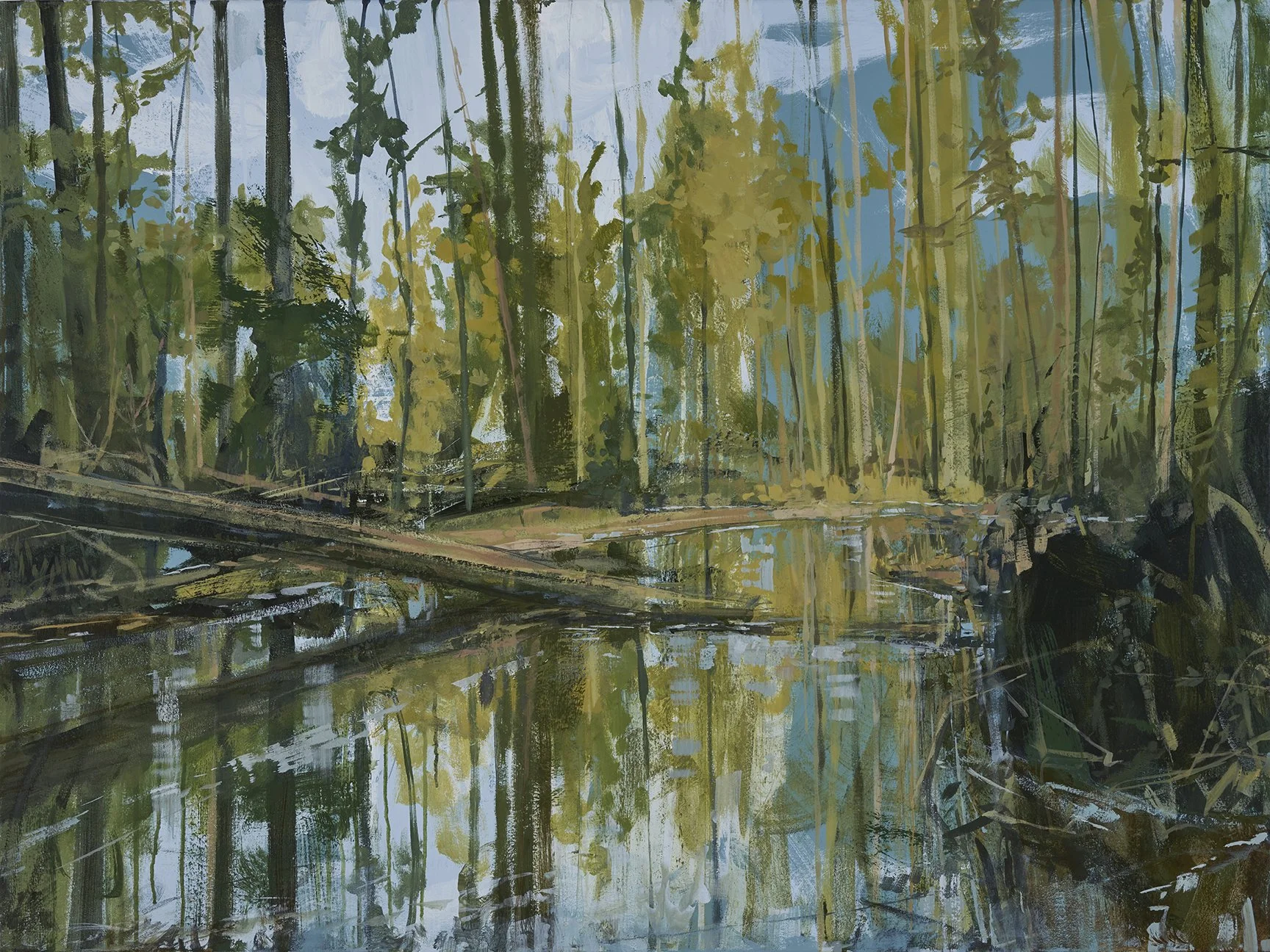
Cherokee Mirror
Acrylic on canvas
36 x 48 inches
(SOLD)
Haven
Acrylic on canvas
24 x 18 inches
(SOLD)
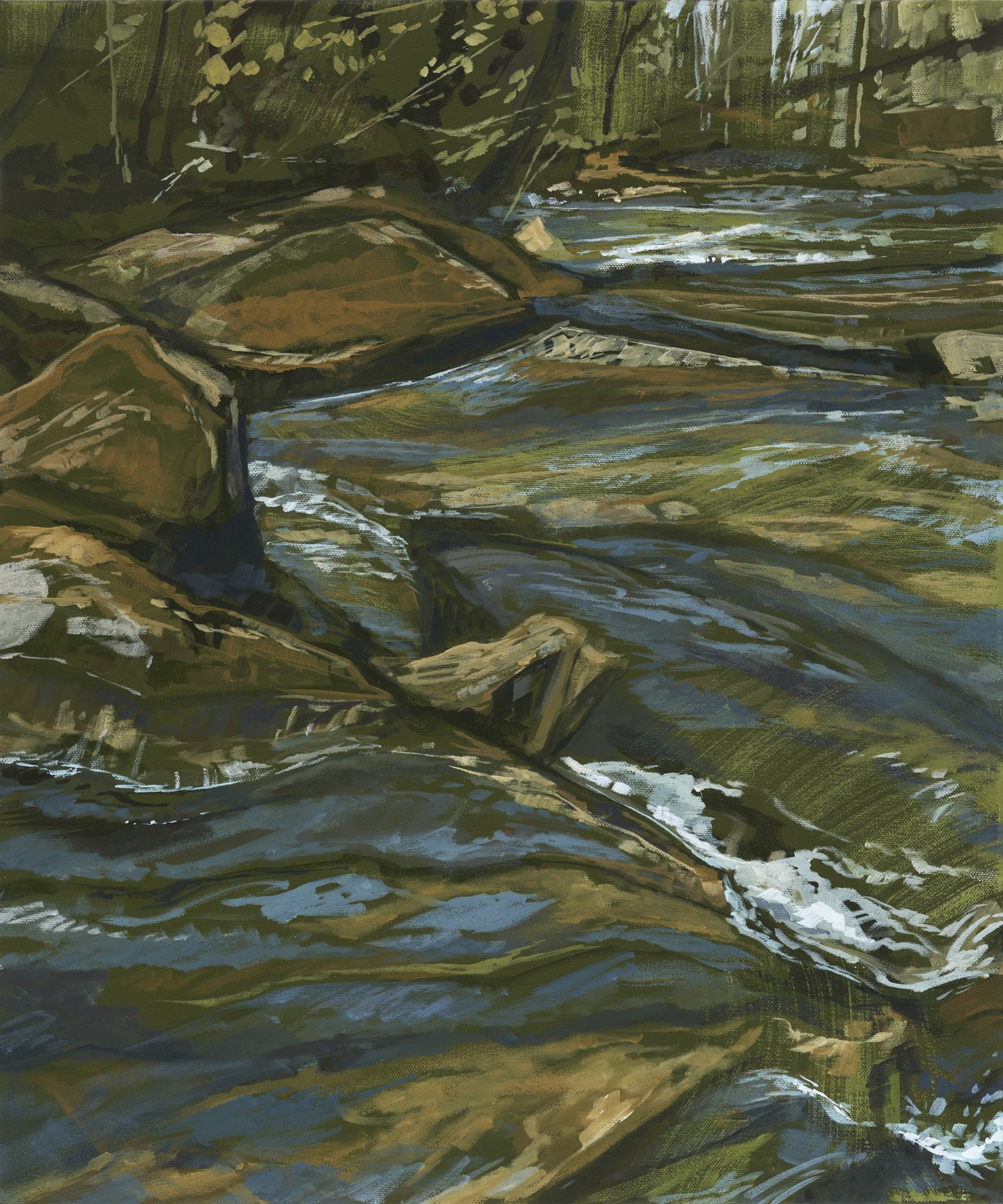
Leveling Out
Acrylic on canvas
24 x 20 inches
Sacred Ground
Bull Creek Preserve
Swannanoa, North Carolina
Shiloh, my six-year-old, and I left early in the morning to avoid the summer heat and have a secluded father-daughter adventure together. I knew this Conservation easement wasn't too large, so I thought it would be a perfect adventure for short legs and two easily distractible minds.
While I had never been to Bull Creek specifically, I am very familiar with the Warren Wilson Campus, and it is a very special place to me. I first discovered the farm at the college after attending a late-night Bubba party, which used to take place at a river bend on the Swannanoa River, just a few hiked miles from the main campus. This party had a long, interesting history, and I am glad I was able to be a witness to the legacy.
However, it was the next hungover morning, after a makeshift camping stay, that I discovered the true historical richness of this area. While wandering among the corn stalks in the farm field, I looked down to see my first Cherokee arrowhead. Finding Native American relics was not new to me; in fact, I already had a good collection obtained through many years of exploring and gathering with my mother.
Most of my points were from the Anson, Catawba, Guilford, and Mecklenburg counties. The heavy presence of flakes, points, and pottery shards was evidence of the village on this sacred ground. It was not until a few years later, while attending the University of North Carolina at Asheville, that I really figured out how extensive that history is.
The Preserve at Bull Creek is adjacent to this area, and it served as an ancient hunting and gathering ground for the many civilizations that have resided in this valley. Bull Creek is an arm of the Swannanoa River, which is an arm of the French Broad River, and this ecosystem benefits greatly from SAHC’s mission to clean and preserve wetlands and native plants.
There are many components to the Conservancy’s plan and, likewise, a variety of benefits to preserving this site.
Out of all the places I explored in the catalog of SAHC properties, the Bull Creek preserve was probably the most used by residents in the area. Shiloh and I had plenty of nice alone time, and the moments between run-ins with fellow hikers were plentiful. However, it did not take long to discover the utility that this resource provided for couples, families, and their pets.
It’s close proximity to Asheville and easy access provide a ready-made forest oasis where people with busy schedules can get a needed break from the chaos of society. I was impressed by the seclusion.
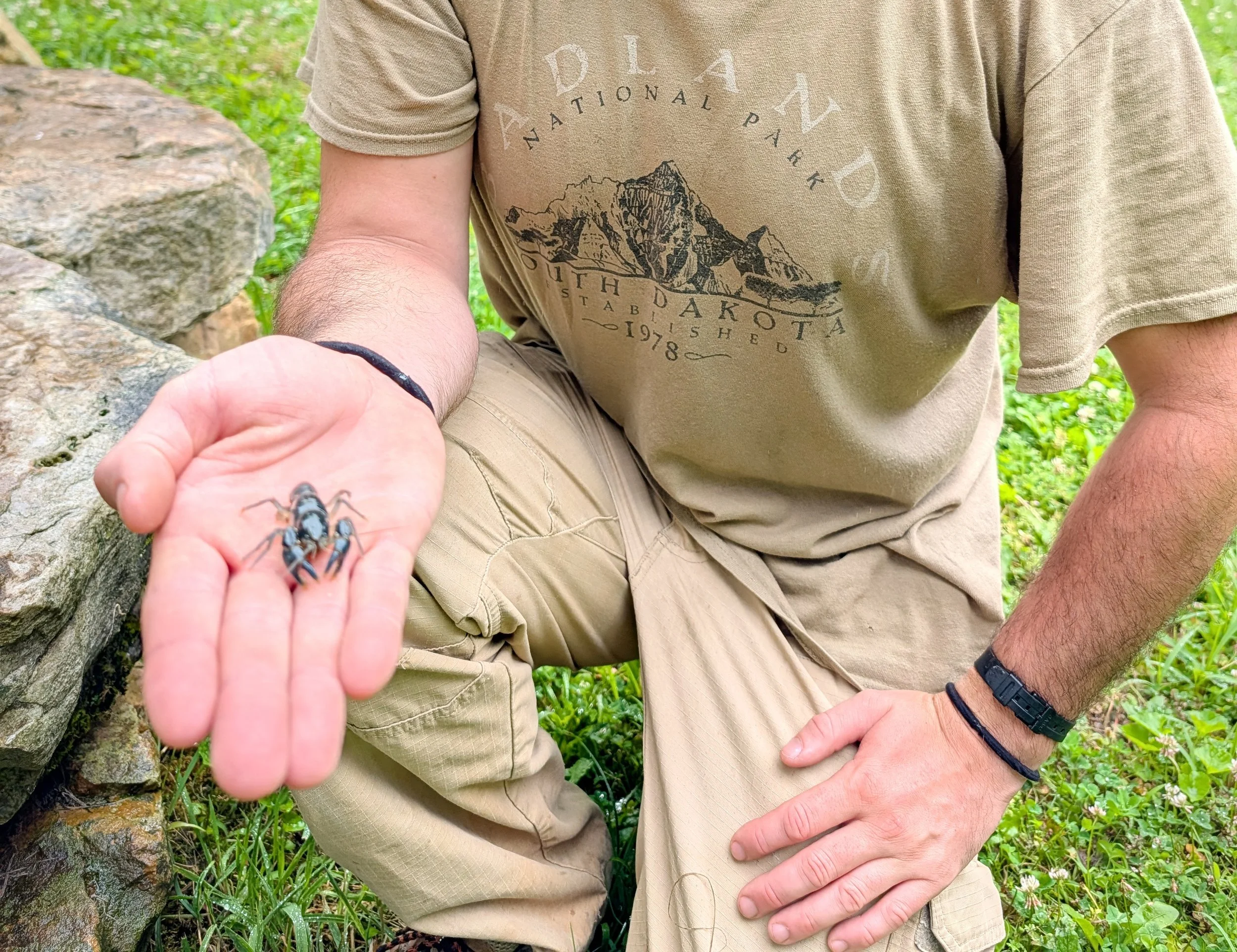
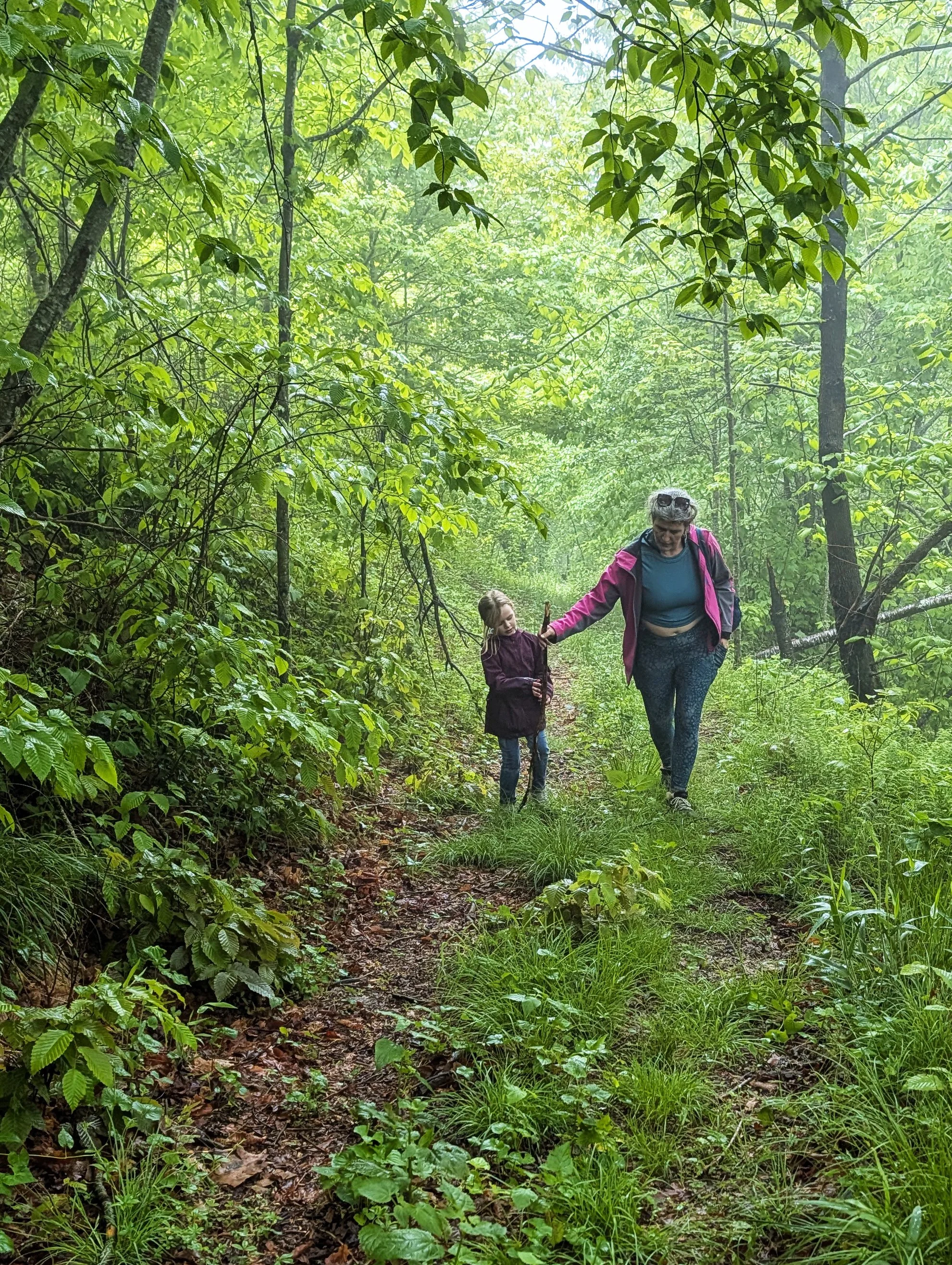
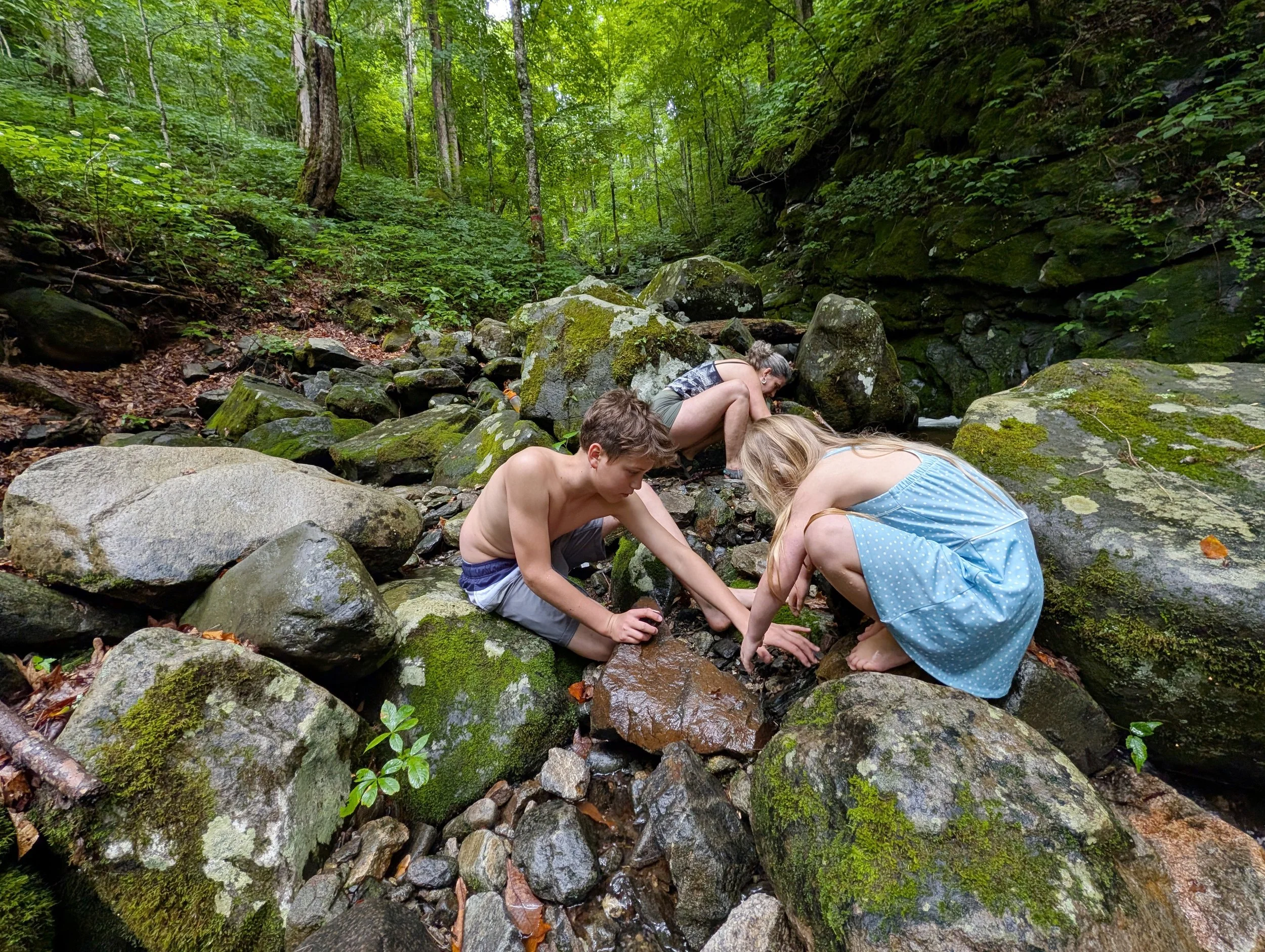
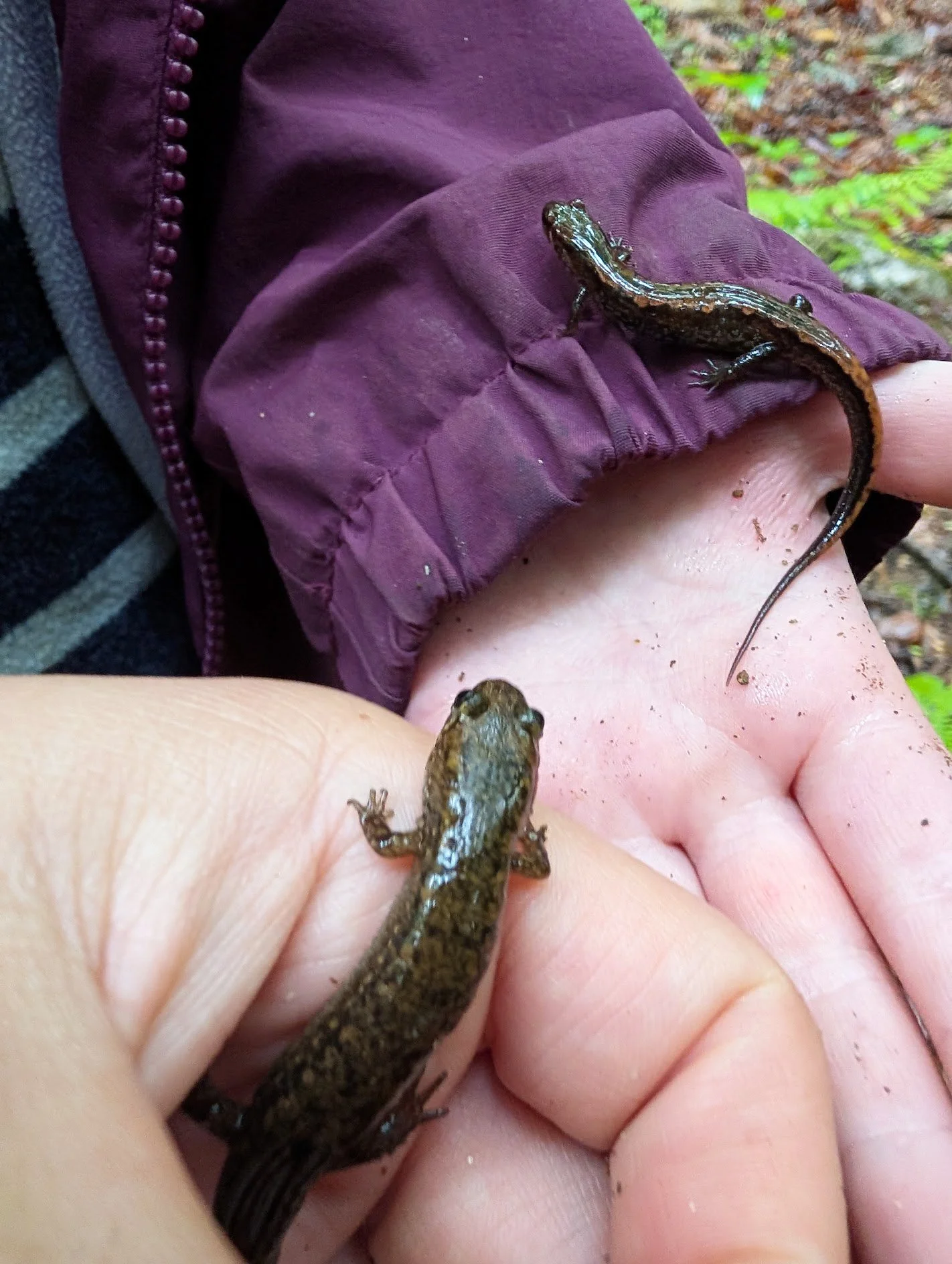
Shiloh and I had a grand time playing in the creek and turning over stones to find salamanders and crayfish. There were many places to discover interesting plant species, fungi, and flowers. At one point, a wild turkey ran across our path, and the deer tracks were abundant.
At the far end of the preserve lives a stone-walled ruin of an old dam. It is a destination for curious minds and has that feeling that historical sites often have. It is, in fact, only about a hundred years old, consisting of a couple of large stone walls, some rusty iron machinery parts, and even a few original timbers once used in the mechanics of the hydraulic system.
However, in the mind of a nerdy history buff and a curious six-year-old girl, the walls are from a lost fort or castle, and the cracked foundation and loose stones tell of an ancient battle that once took place here.
As we make the short journey back to our pickup truck, we come across a large family playing in the creek. A group of parents and many children are picnicking on larger stones and playing in bathing suits in the cool water. They are familiar with this space, and you can tell it is a regular thing.
The family is too large to be nuclear. It's nice to see cousins, aunts and uncles, moms and dads all hanging out without phones or other distractions. The sun is out, and it is warm, but there is also plenty of canopy to give shelter.
Shiloh makes a new acquaintance, and there is an apparent cycle of new friendships that take place in such a necessary and accessible natural space.
SAHC Community Farm
Buncombe County, North Carolina
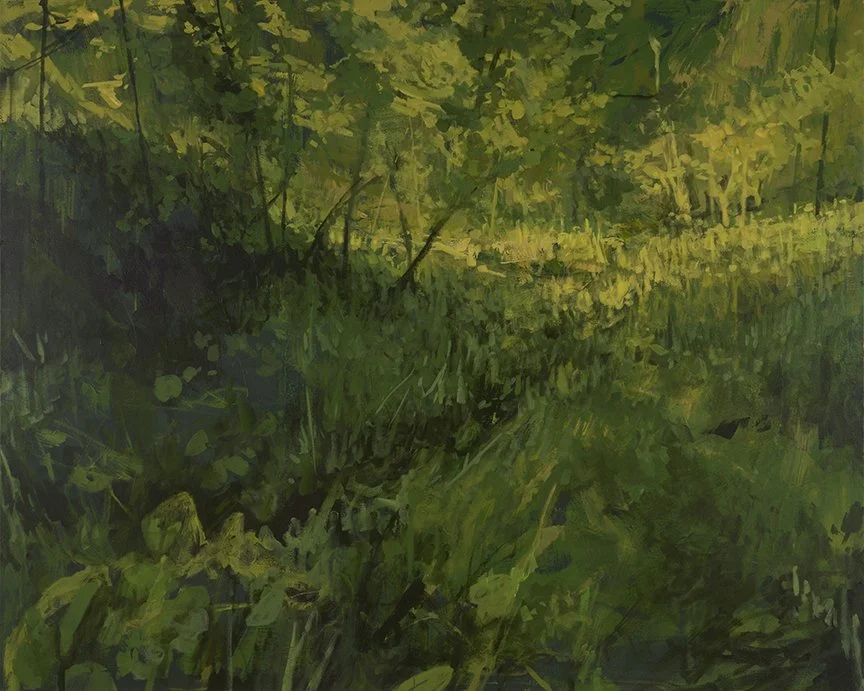
Appalachian Greens
Acrylic on canvas
48 × 60 inches
(SOLD)
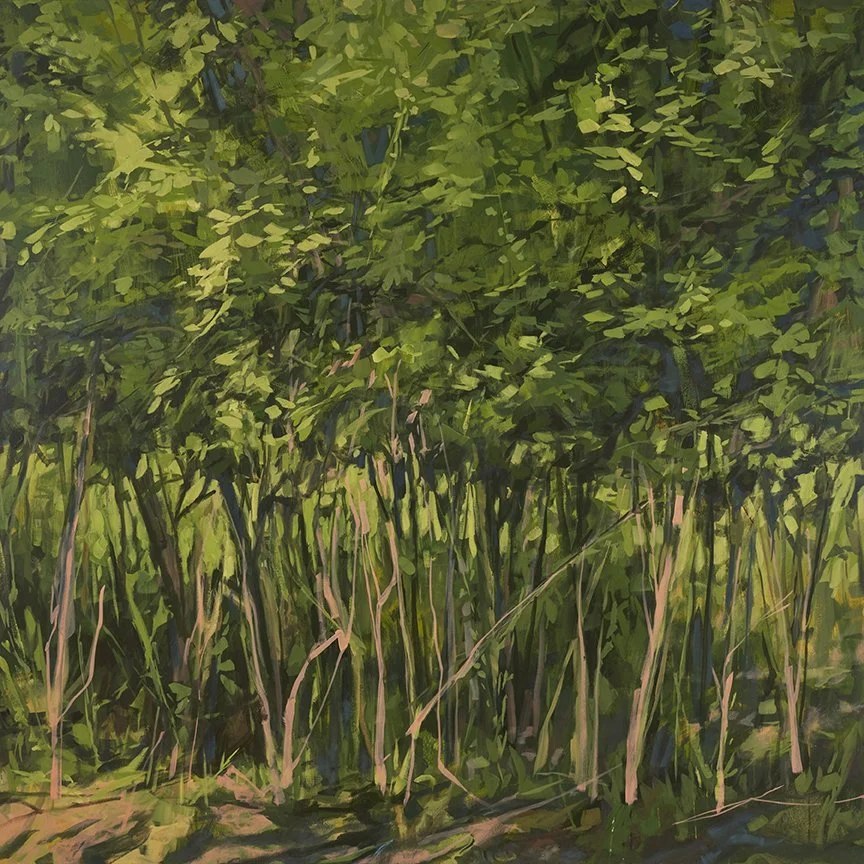
Secret Garden
Acrylic on canvas
60 × 60 inches
Appalachian Greens
The Southern Highlands Appalachian Conservancy protects many sacred places in the Blue Ridge Mountains of North Carolina and Eastern Tennessee. While I do love the spectrum of blues that looks like an endless sea from the panoramic views along the parkway, to me, the color of the mountains is green.
As a painter, I do see violets, warm grays, umbers, ochres, and even pinks, but the defining color of western North Carolina spring and summer is green, green, green. To me, green says “life.”
The forests and fields with such a large array of greens in the canopy and across the prairies is comforting and a testament to fertility and abundance. As a kid, when my family drove up to Boone from Charlotte, the defining greens were that of the emerald tobacco fields. That is a color one cannot forget. The rich, warm siennas of the turned soil and the cool grays of the stoic tobacco barns highlighted the saturation of the greens.
These days, the greens are largely presented by our towering oaks, and bright maples, and alpine yellow pines. Tobacco, which once blanketed the rolling hills between the creeks and rich forests, are now mostly tall grass fields, but lands the conservancy are full of the native species that give insects and wildlife the habitats they evolved in.
Pom- pom balls of violet-pink flowers dot the fields to provide the sole source of nourishment for the Monarch Butterfly larvae. The need for these native grasses and stemmed plants called forbs, if left to grow to maturity, die in the winter and provide an essential ecosystem for many of the native insect species. In fact, these habitats provide food, larvae host sites, and shelter.
In turn, these insects are the foundation to the food web, and many grassland birds, reptiles, and small mammals depend on this resource. These fields are crucial biodiversity hotspots, and the SAHC protects and promotes these fundamental ecosystems.
Unlike most of the preserves I visited, The SAHC Community Farm in Alexander, North Carolina, is a charismatic site that is comprised of picturesque prairies and rolling hills flanked by patches of trees. There is a small creek there that has been thoroughly cleaned and rebuilt to give the farm crucial wetlands.
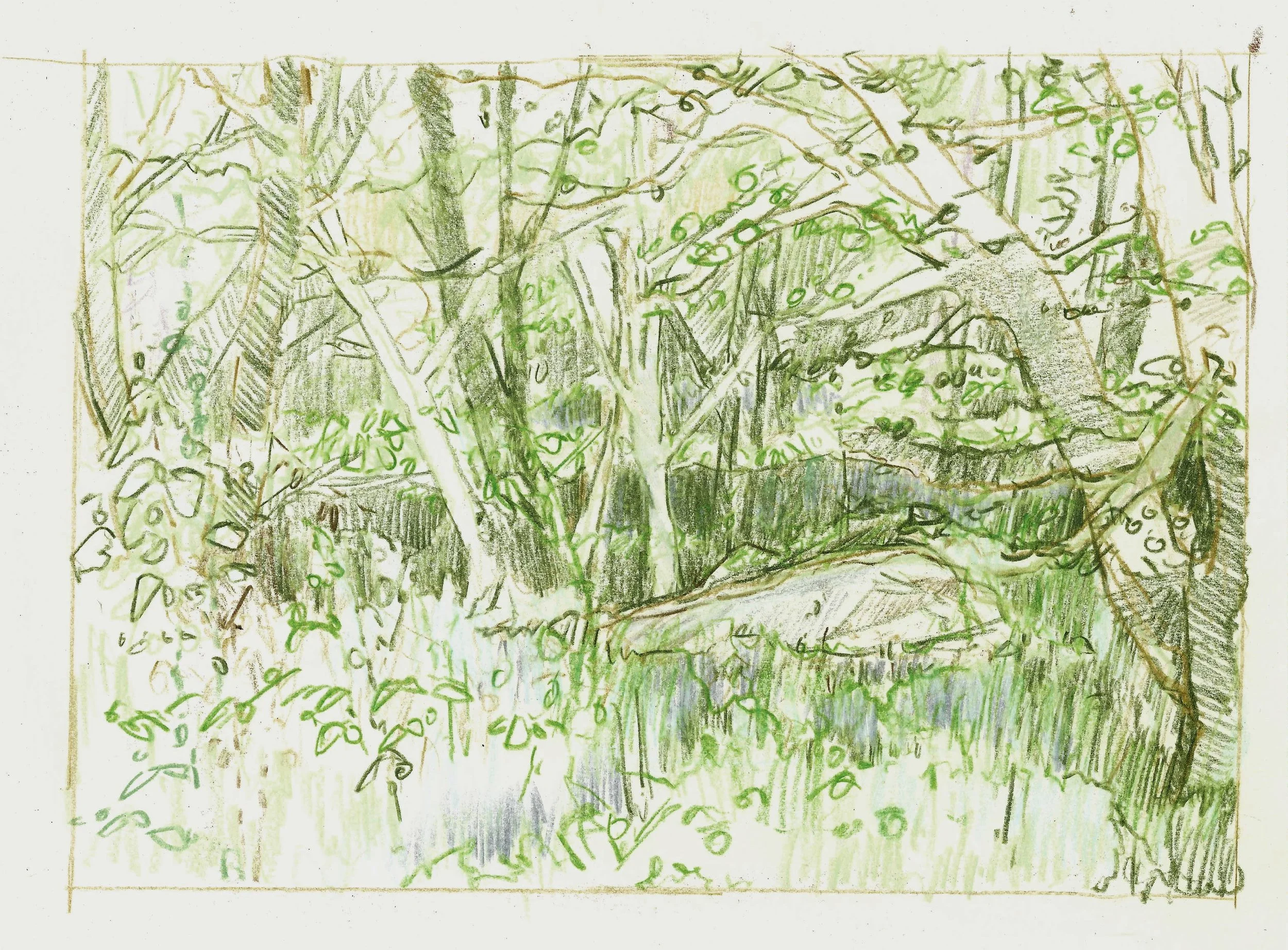
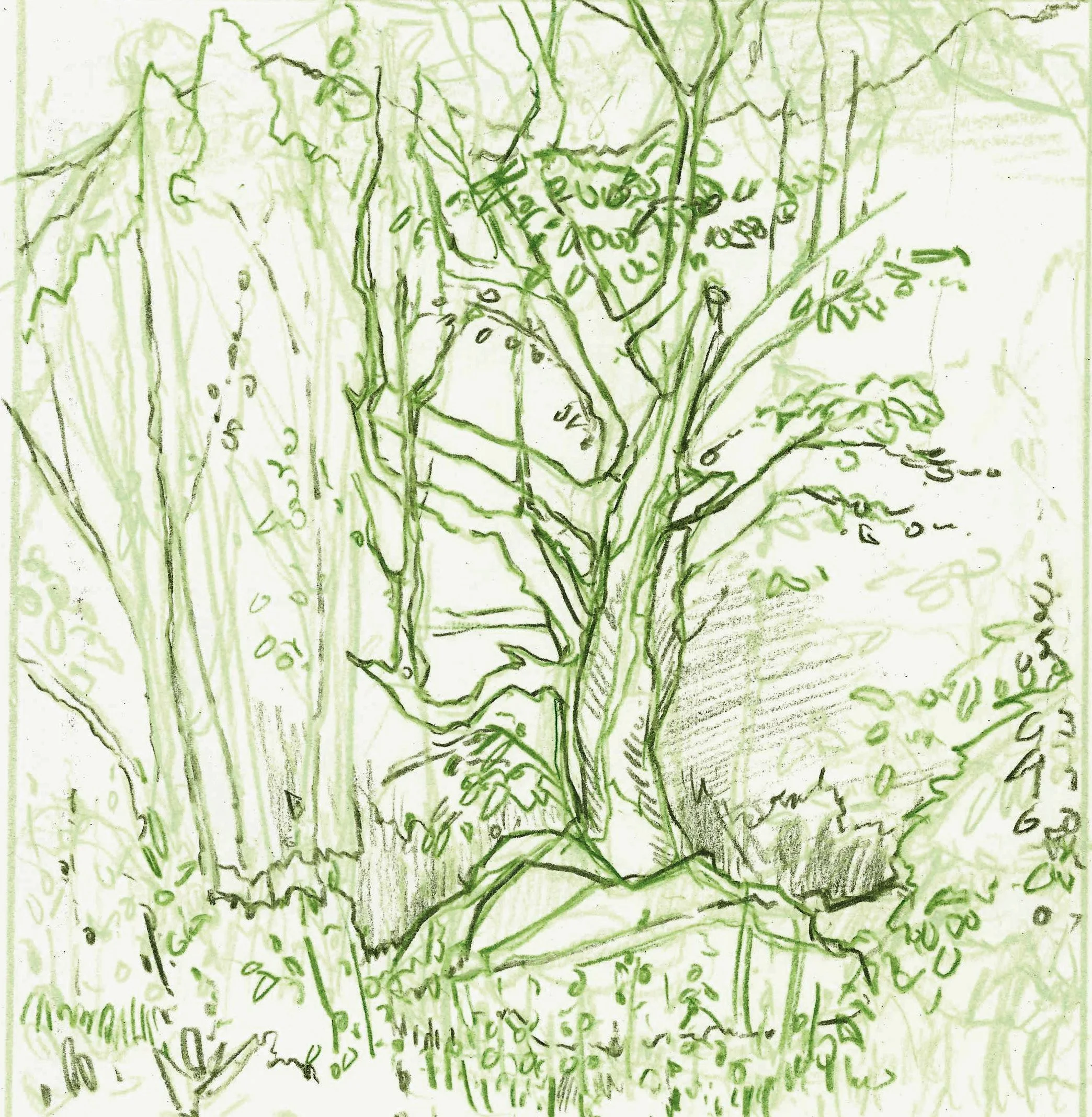
On the hot, sunny day that I chose to walk the farm, I found myself taking refuge along the small creek and among the low canopy. The picture and sketch I made at this spot are the sources from which I will paint later.
This was the 1st site that I visited, and it was here with a notebook and pencil that I decided to not only paint the sites but to write about them as well. I am not a writer, but I do like to put thoughts to paper as the process is meditative, and sometimes written reflections can be illuminating.
Upon finding a wide, low-hung tree, maybe that of an old fruit orchard, I sit and reflect on my purpose with this project. Then, I intentionally let go of a plan and let myself write in free form. I embrace my inner beatnik and just start writing feelings and observations.
I disregard structure and pretense, I let go of ego, and I allow vulnerability. This is how I find meaning and spirituality in nature.
And as I relax and even lay down, I become one with the ground, and I feel the vines and roots and even thorns slightly dig into my back. I look down and see one long thorny stalk turn from lime green into violet, into sienna, into a light pink, and finally into a white gray with black-tipped points.
The beginning of life all the way to death in one short, curvy line.
Sitting still like this reminds me of hunting, which is something that I love to do. I do like knowing that I can provide food for myself and my family right off the natural landscape.
I have found that for me, hunting is sitting quietly in the woods without moving for hours on end, observing wildlife while they have no idea that you are there. I don't need to be successful on a hunt to get so much out of an expedition.
In fact, it is turkey season while I am here, and while I have seen no birds the several times I have gone out, while writing in my book I turn around and spot a turkey hen at the edge of the tree line.
Imagine that.
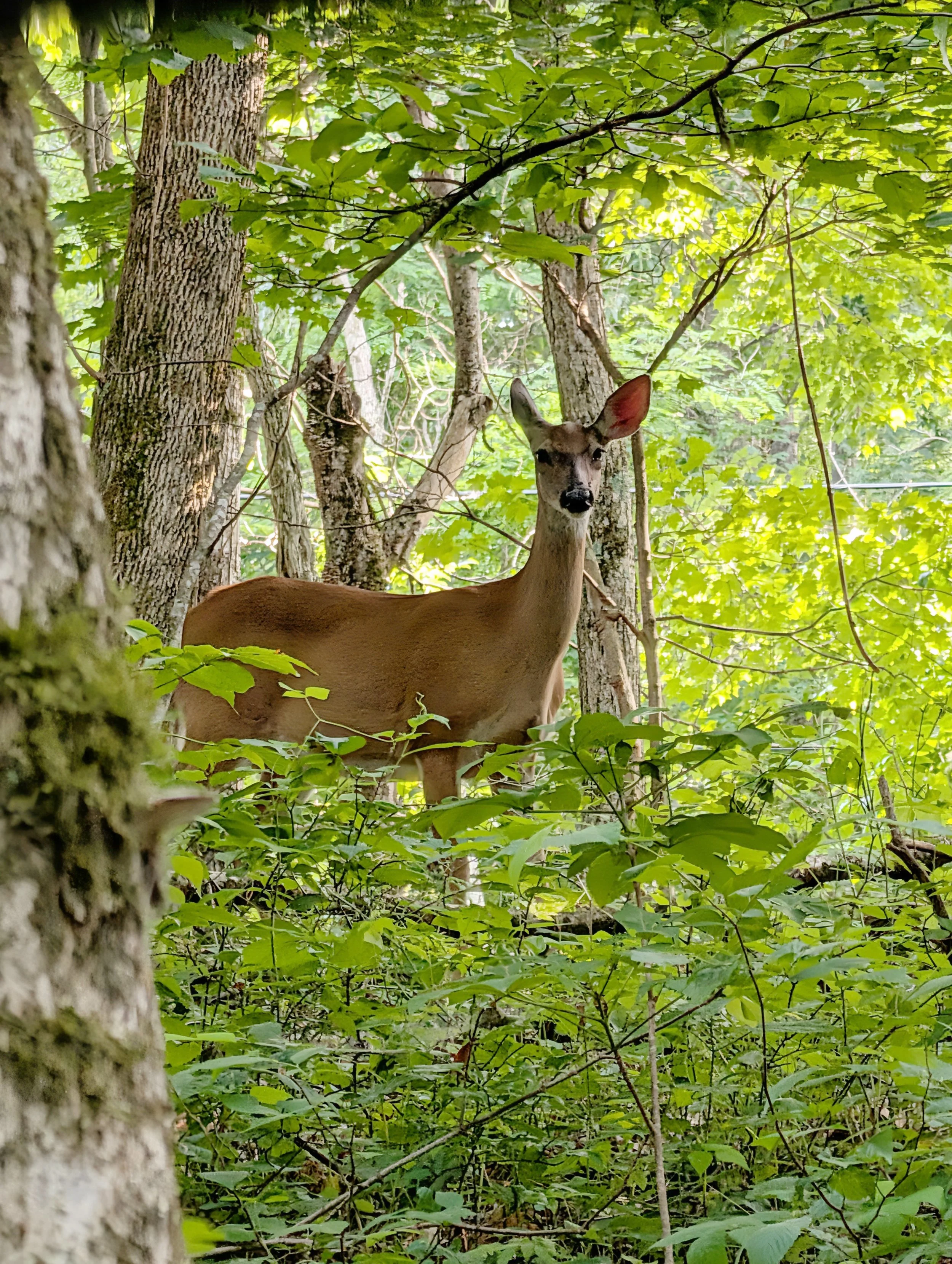
When I stand up to leave, a large doe is maybe 20 yards from me and bolts when the sunshine finds me through the leaves.
I smile inwardly because there are always lessons in the places we are not looking for them, and the natural world has no deficit of knowledge.
Grassy Ridge preserve
Highlands of Roan
Avery/Mitchell Counties, North Carolina
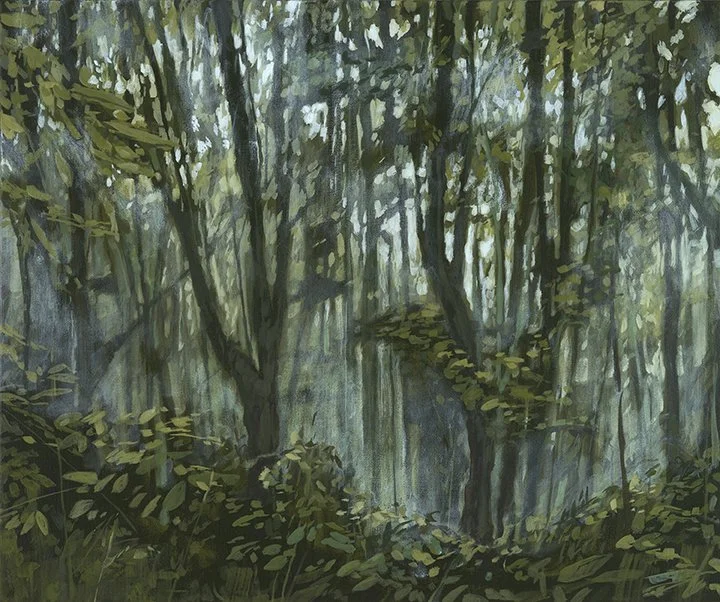
Climbing Mist
Acrylic on canvas
20 x 24 inches
(SOLD)
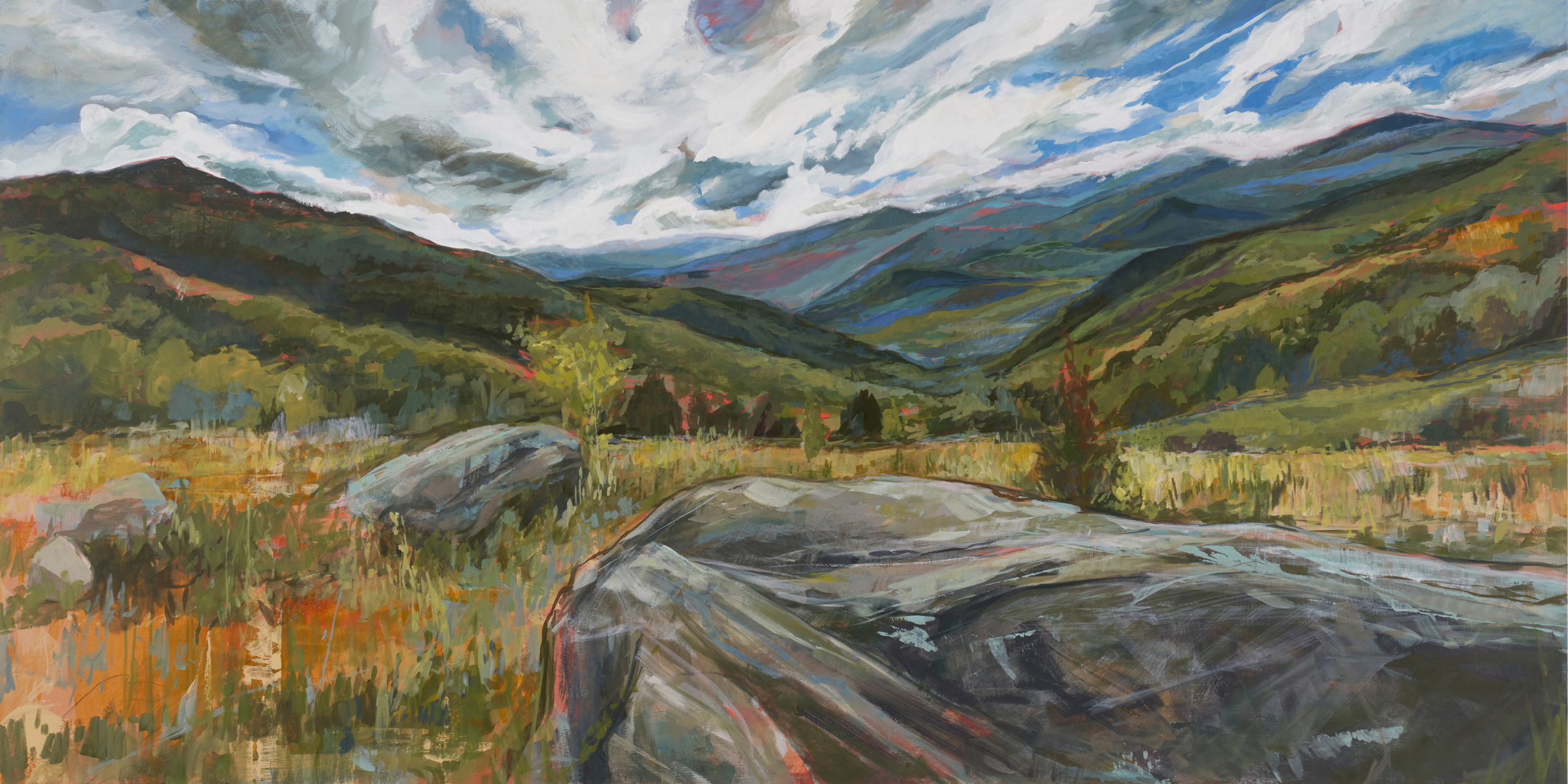
Grassy Mountain Bald
Acrylic on canvas
36 x 72 inches
(SOLD)
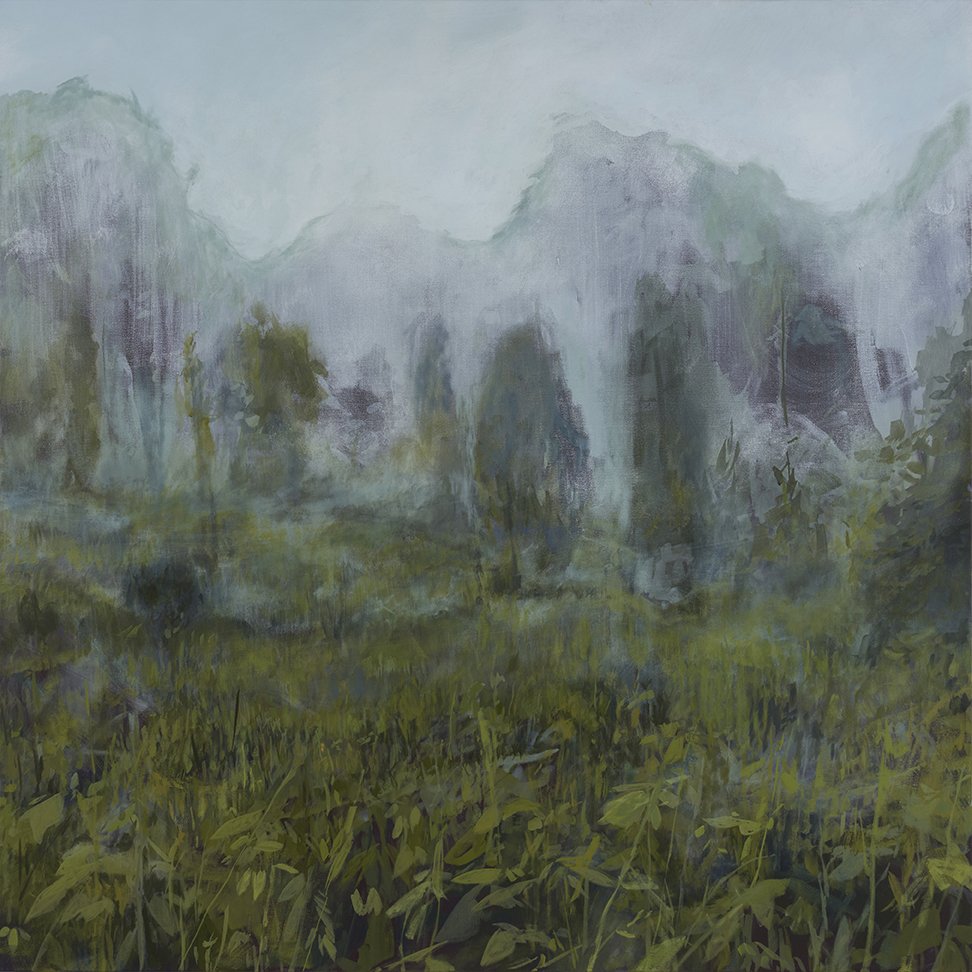
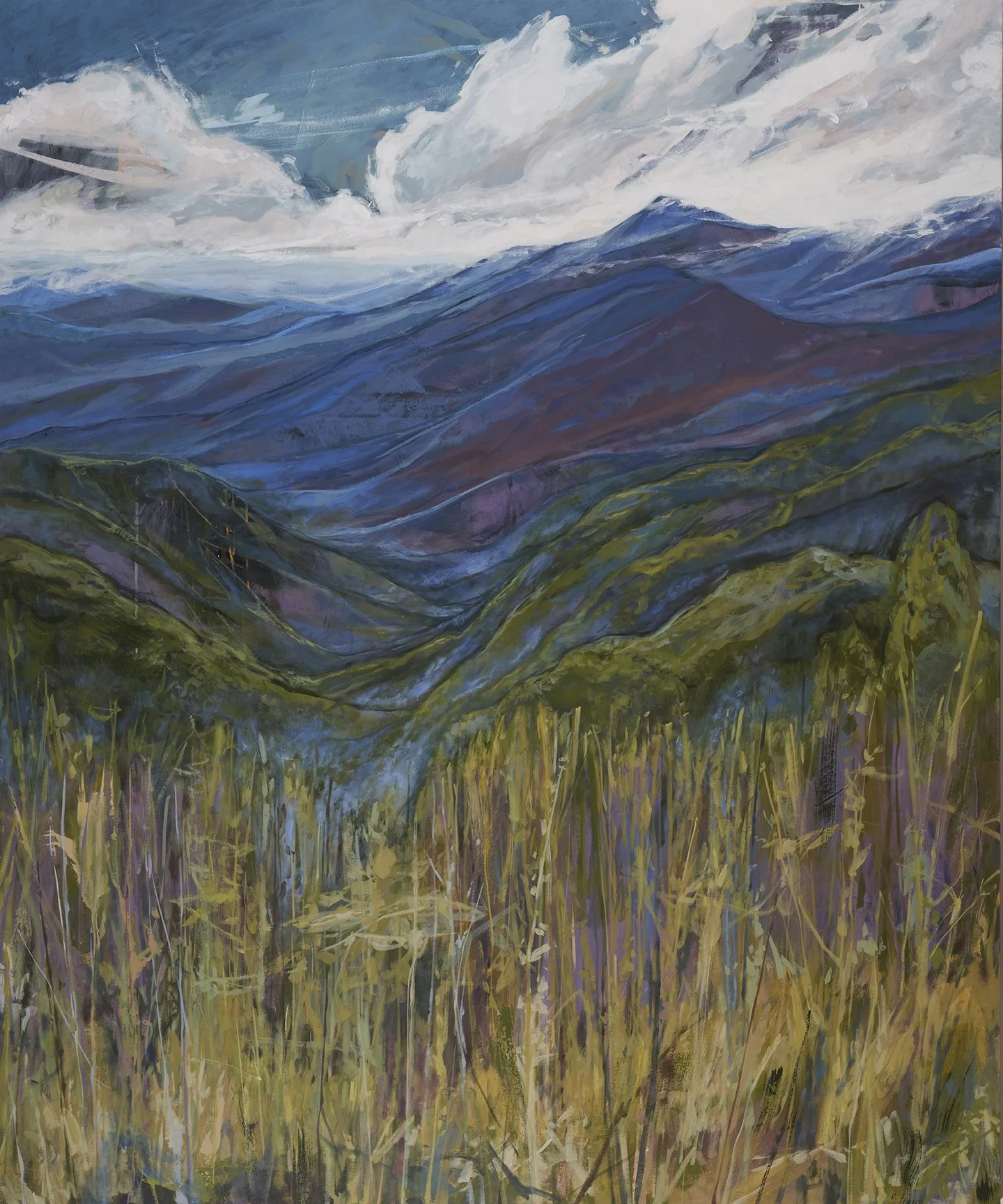
Mountain Break
Acrylic on canvas
72 × 60 inches
Morning Dew
Acrylic on canvas
48 × 48 inches
(SOLD)
Cloud Land
Upon arrival at the Bird House Preserve near Spruce Pine, North Carolina we climbed a long gravel driveway to a charismatic cabin home. It was raining that afternoon, and as we entered the field that surrounds the house, we were completely immersed in a soft white cloud. There was no sense of elevation or position. The abundance of summertime moisture and fertility was magical.
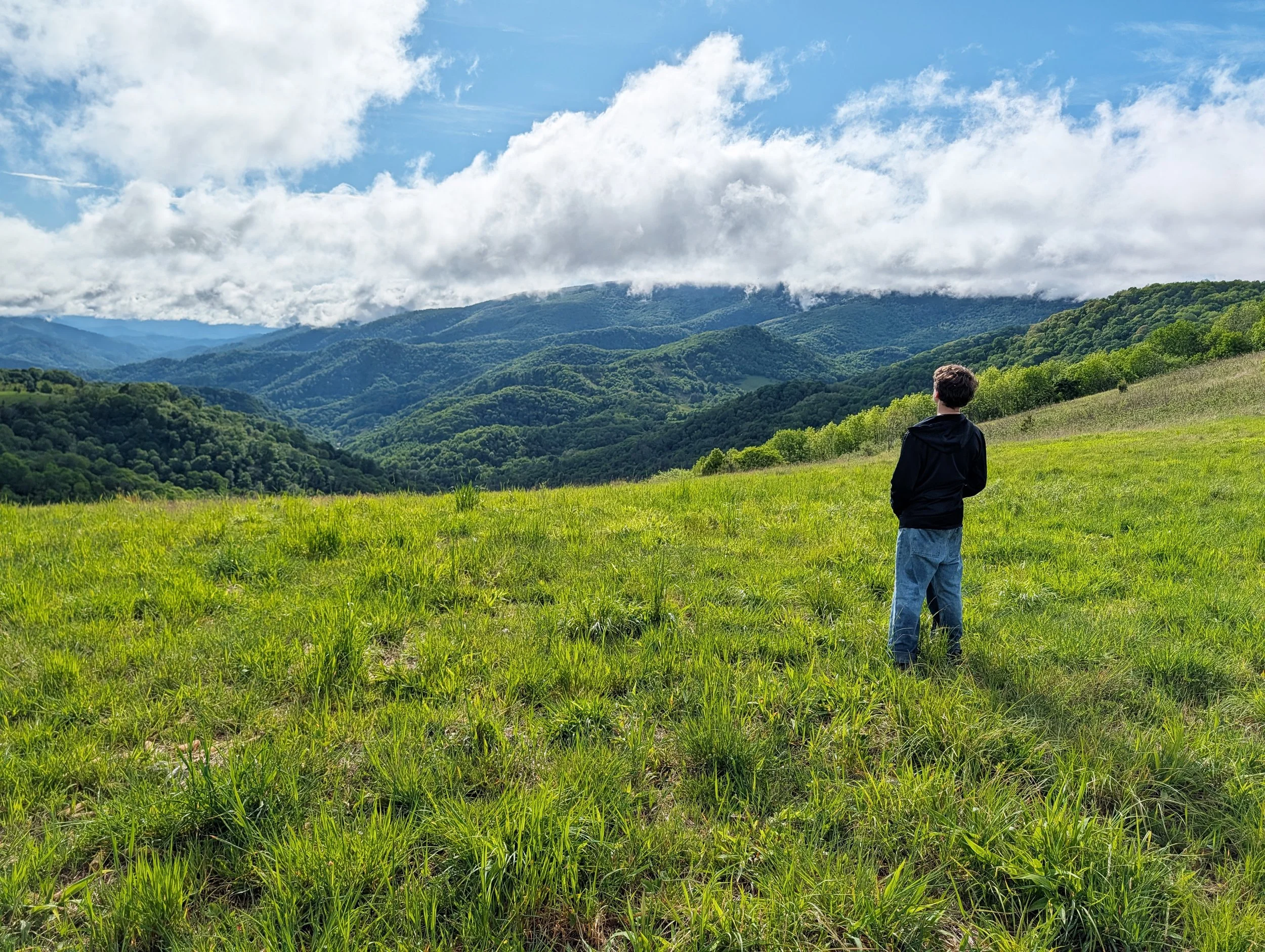
Looking out across the pasture of milkweed, wild grasses, and wildflowers, the immediate landscape revealed itself through layers of fabric-like vapors. The air was fresh and sweet. The smell of the soil and foliage filled our nostrils, and the cool moisture bathed us in a cool mist. We walked through the tall grass and felt the weight of the heavy dew cling to our boots and soak our legs. This was our baptism to this summer’s pilgrimage through these protected lands.
The children frolicked without hesitation as Jamie and I walked along silently, feeling renewed, grateful, and full of love and admiration for our children’s natural connection to the land. As we walked along, patches of blues and greens began to reveal themselves as our eyes penetrated the cloud we pushed slowly through. Trees, tangles of vines, clumps of grass, and rows of large bushes stood like vestiges of old roaming giants and mythological creatures along the edges of the prairie.
.
Here and there, high above our heads and in all directions, darker green hills and peaks began to materialize into existence as stark white clouds rolled past and allowed the landscape to slowly emerge
All day, and into our first night, a symphony of large raindrops patted the surrounding brush. A steady rhythm of bass notes splashed and fell into foaming puddles, drumming the tempo along the foundation of the house. Smooth lines of dripping rivers fell from the edges of the tin roof, adding to the chorus of nature's wet melody.
The warm hardwood paneled walls and the hardback book smell of the cabin brought childhood memories flooding into my head and I wrote a chapter about growing up visiting my family farm in rural eastern North Carolina. Finally, as I tucked my baby girl into bed for the night, I read to her from my writings, and together we relived my carefree childhood farm adventures and the circle came around to complete another revolution.
Robinson Rough Preserve
Sandy Mush, North Carolina
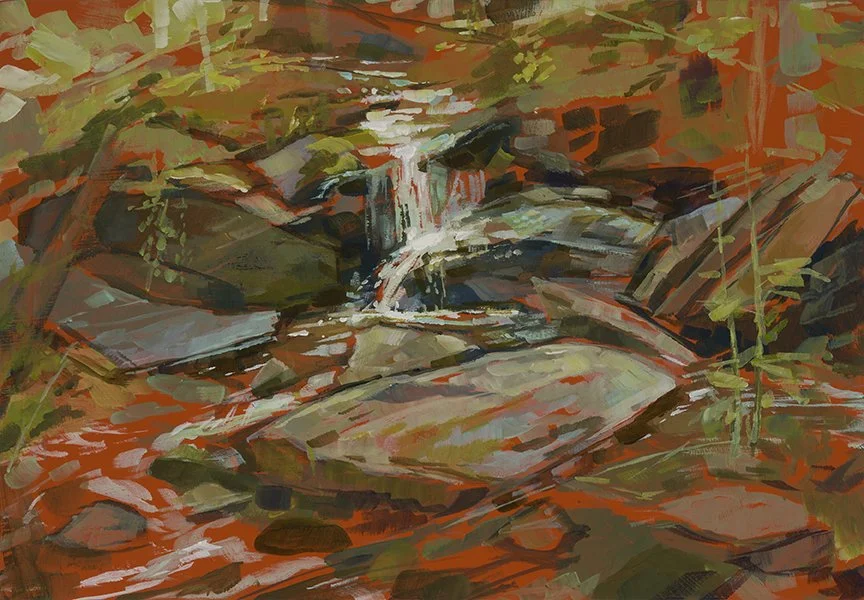
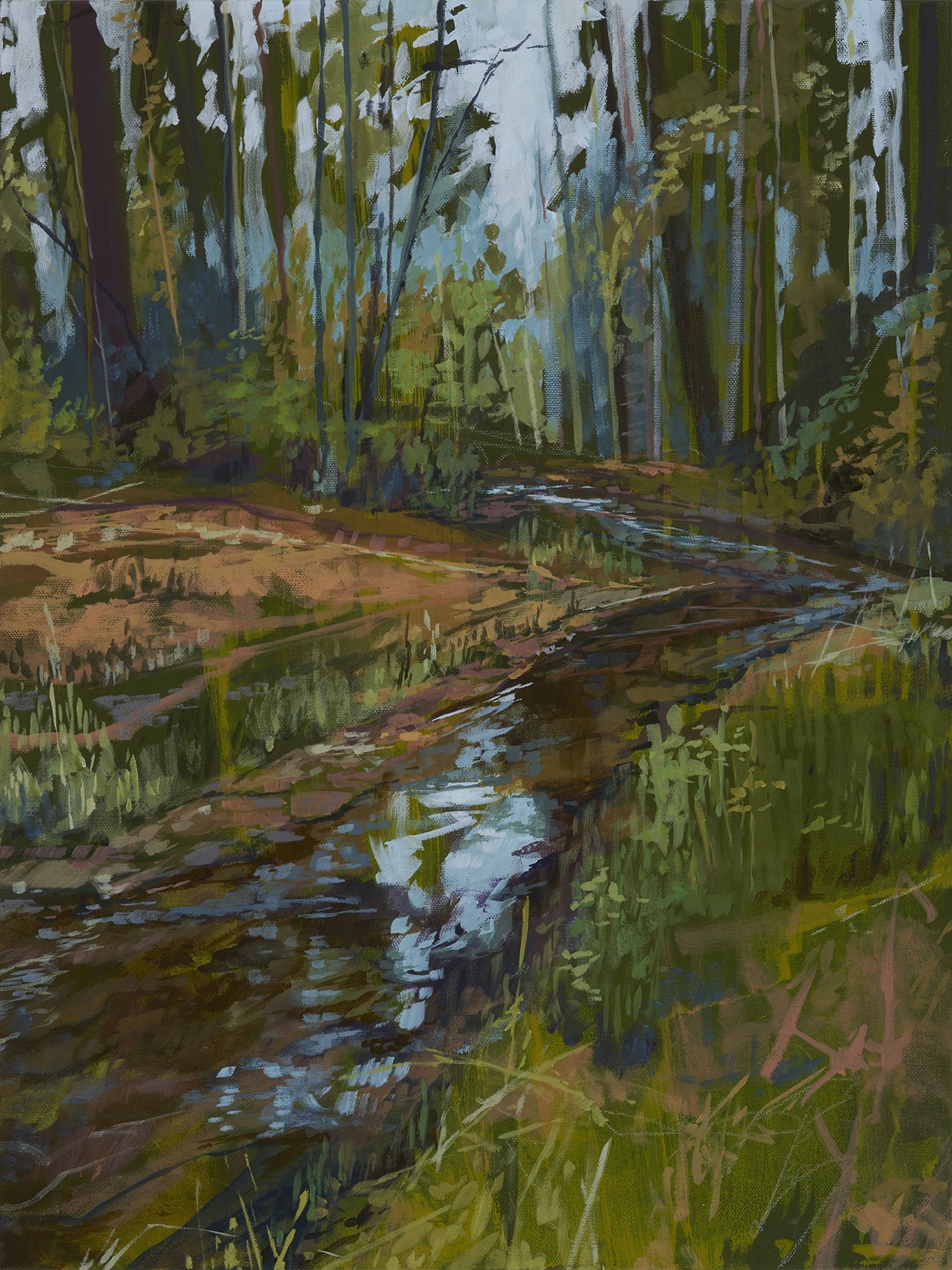
Crawdad Pool
Acrylic on canvas
9 x 13 inches
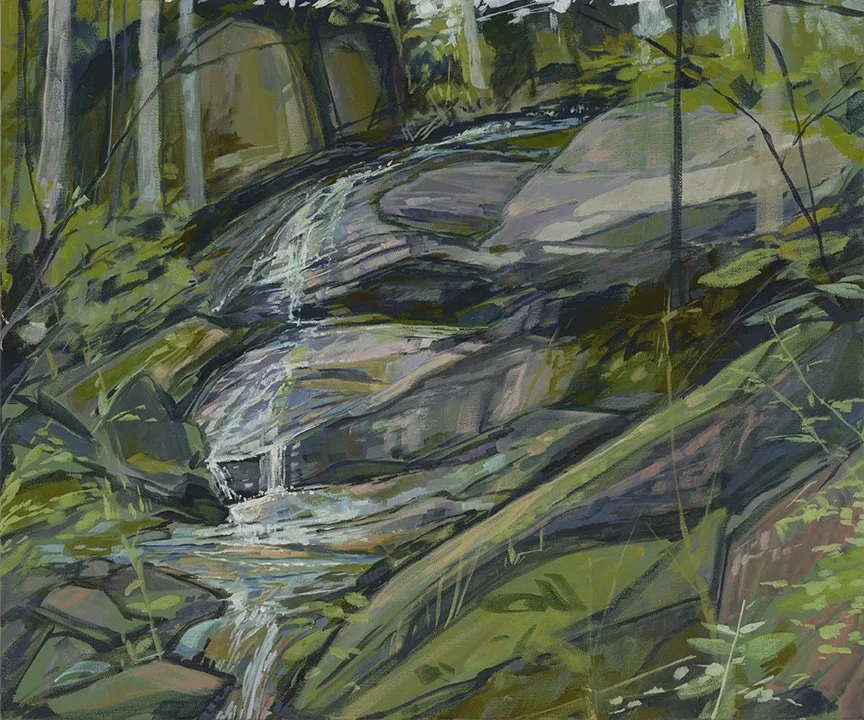
Slip and Slide Forest
Acrylic on canvas
20 x 24 inches
Robinson Rough
I have been familiar with the Sandy Mush community for almost 30 years. It is one of those truly American places that rarely changes. I bet it will stay exactly the same for another 30 years.
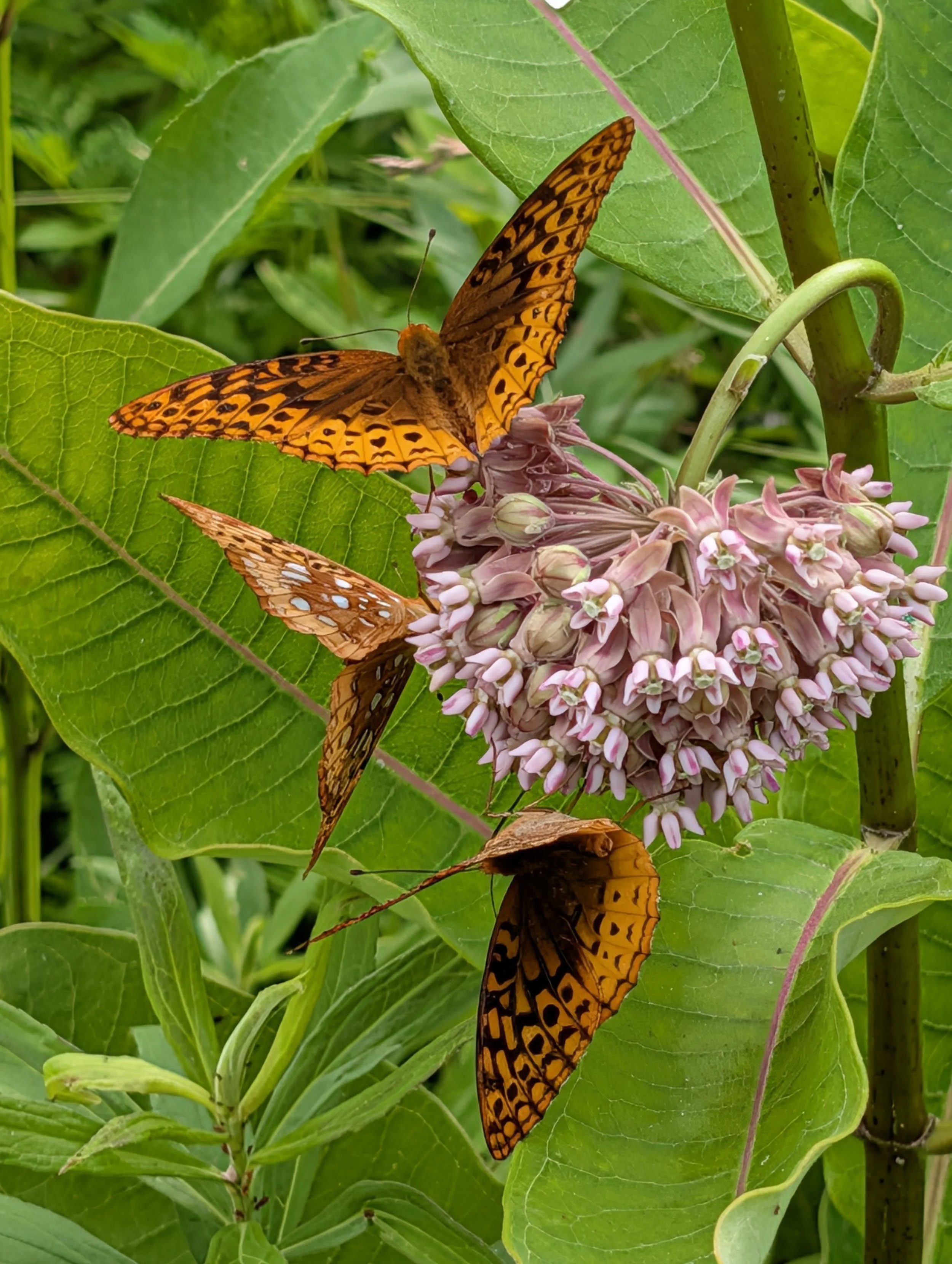
Driving up just past the Community Center, you wind your way up a long gravel road until you pass a small two-story farmhouse from the 1800s and into a large field full of tall milkweed and butterflies. This is another one of those places that is teeming with wildlife.
The caretaker of this particular preserve is Bill Spears. Upon meeting Bill, you instantly feel calm and grounded, as if his spirit is somehow tied to the land. I found this to be true about each one of the preserves and their individual stewards. I feel like it is almost a requirement to do this kind of work. It seems that they need the land as much as the land needs them.
Bill meets us first thing in the morning, and with a fresh hot cup of coffee in my hand, my wife, Jamie, and I listen to Bill enthusiastically tell us all about the history of the farm, the cabins, the barns, and how this particular property was acquired by the conservancy. I become a little emotional as I learn that my friend, William Hamilton, orchestrated its preservation. It was through William that I first came to learn about this organization.
As we venture around the old farmstead, we are greeted by all sorts of interesting relics and natural phenomena. There is an old ruin (an old inn and gathering place) with the chimneys still standing, which is a testament to a simpler lifestyle. There is another bigger, old homestead still standing with the old furniture inside, and the cedar shake siding is in pretty good shape. Nature is definitely determined to reclaim this spot, and vines have made their way all through the old roof. There are some stained glass panels that fill in for lost window panes here and there, and a Vietnam War-era metal army helmet hanging on a peg at the outhouse.
This place gives you the feeling of a former hippie colony. In your mind you can hear and feel the rhythmic dancing, bluegrass music, and laughter that once serenaded this old house. The foundation is made of huge stones, and there is a sign tacked to the porch that warns of the rattlesnakes who now call this place home.
After a late supper at the refurbished cabin where we have the privilege to stay, we venture back down into the holler past a small frog pond to the rich milkweed field. Our dog, Jia, has a fresh coat of that stinky sulfur-rich pond muck after her evening baptism in the little pond.
It is almost nine P.M. now, and the fireworks show is about to begin. Thousands of fireflies begin to pop and twinkle as if there has been some grand choreographed dance planned. With a curtain of stars in the background, the lightning bugs begin to glow in unison, and the pitch and rhythm of the sparks roll like a southern jazz band playing a ragtime tune.
My kids jump and tumble and wrestle with us as we adults try to be as calm and still as we can in order to honor the show. But it is summer and kids don't play by those rules when they are in a place of such freedom and happiness. Indeed, they are themselves part of the show, and who are we to stifle that flame?
Little Cove Creek
Highlands of Roan
Carter County, Tennessee
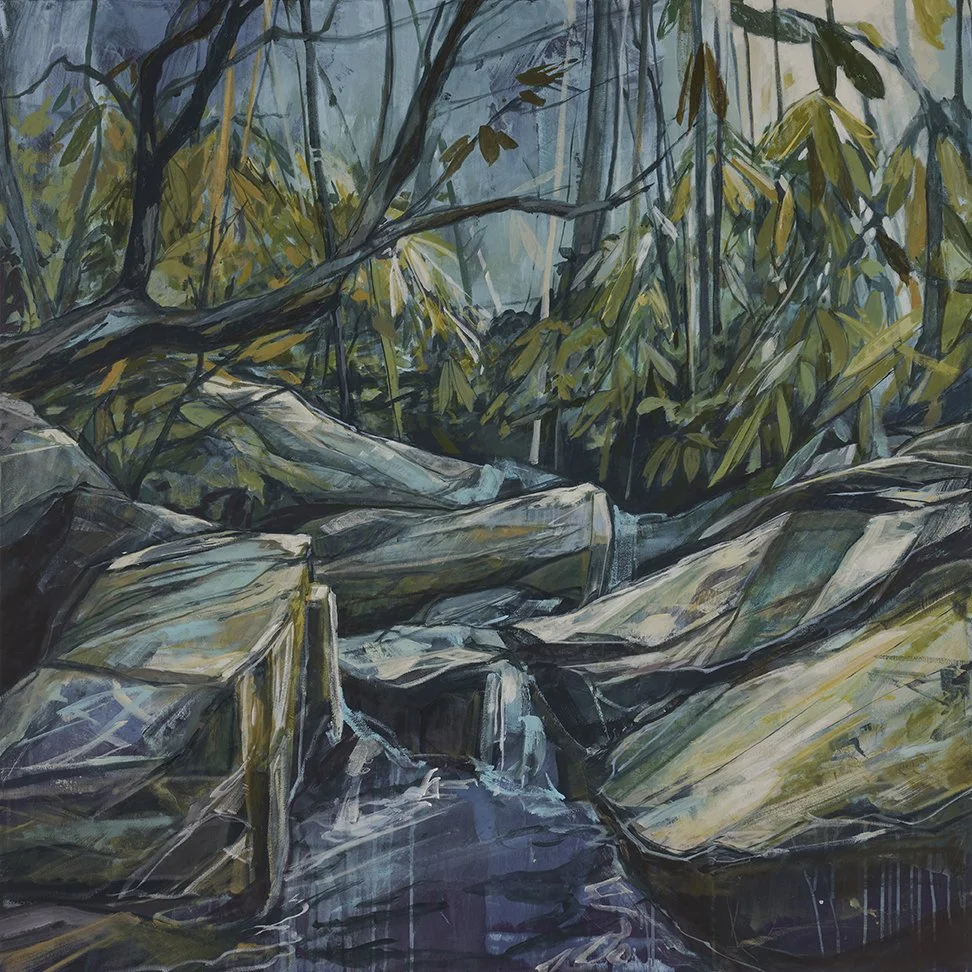
Indigo Headwaters
Acrylic on canvas
48 x 48 inches
(SOLD)
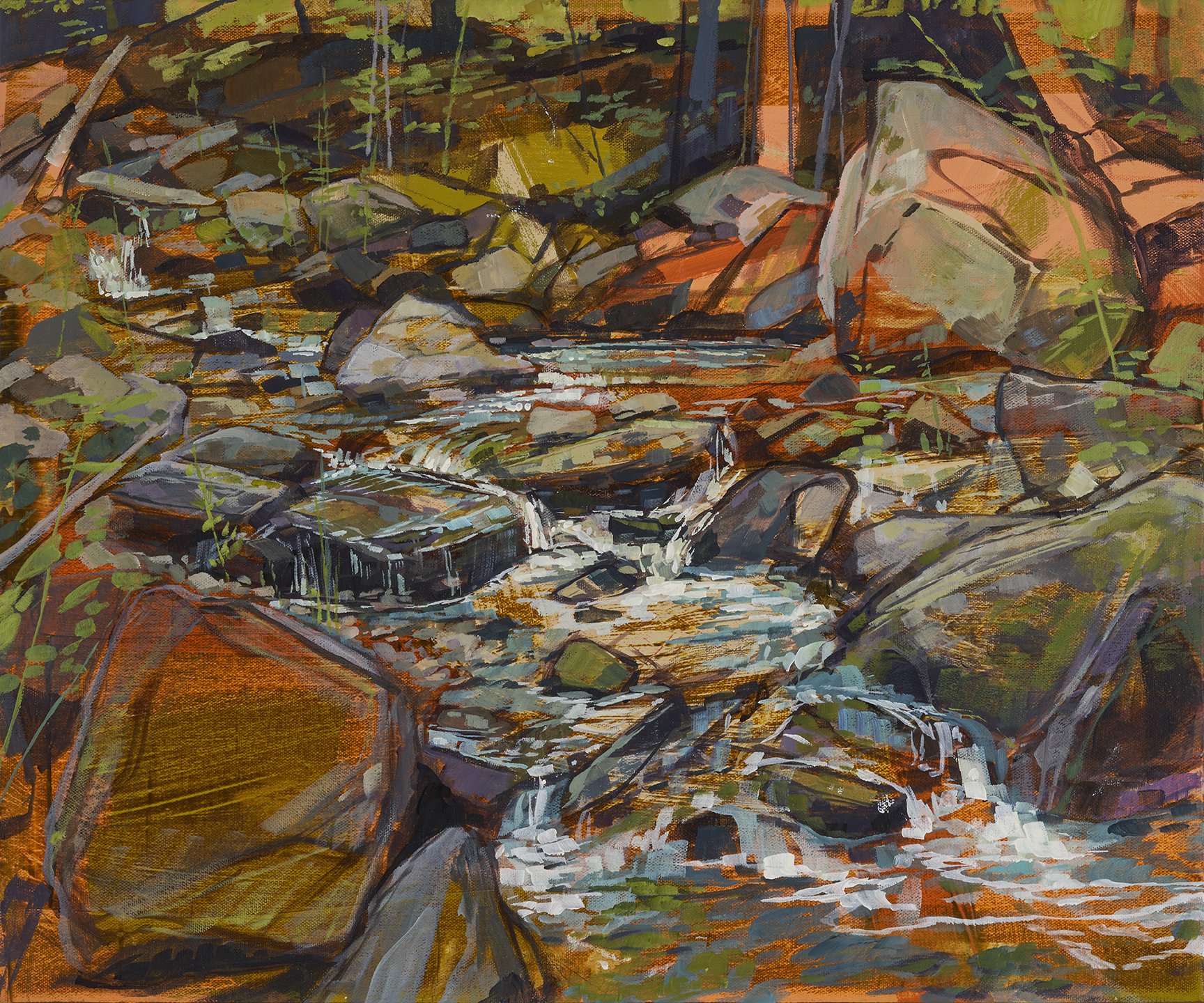
Violet Tumble
Acrylic on canvas
20 x 24 inches
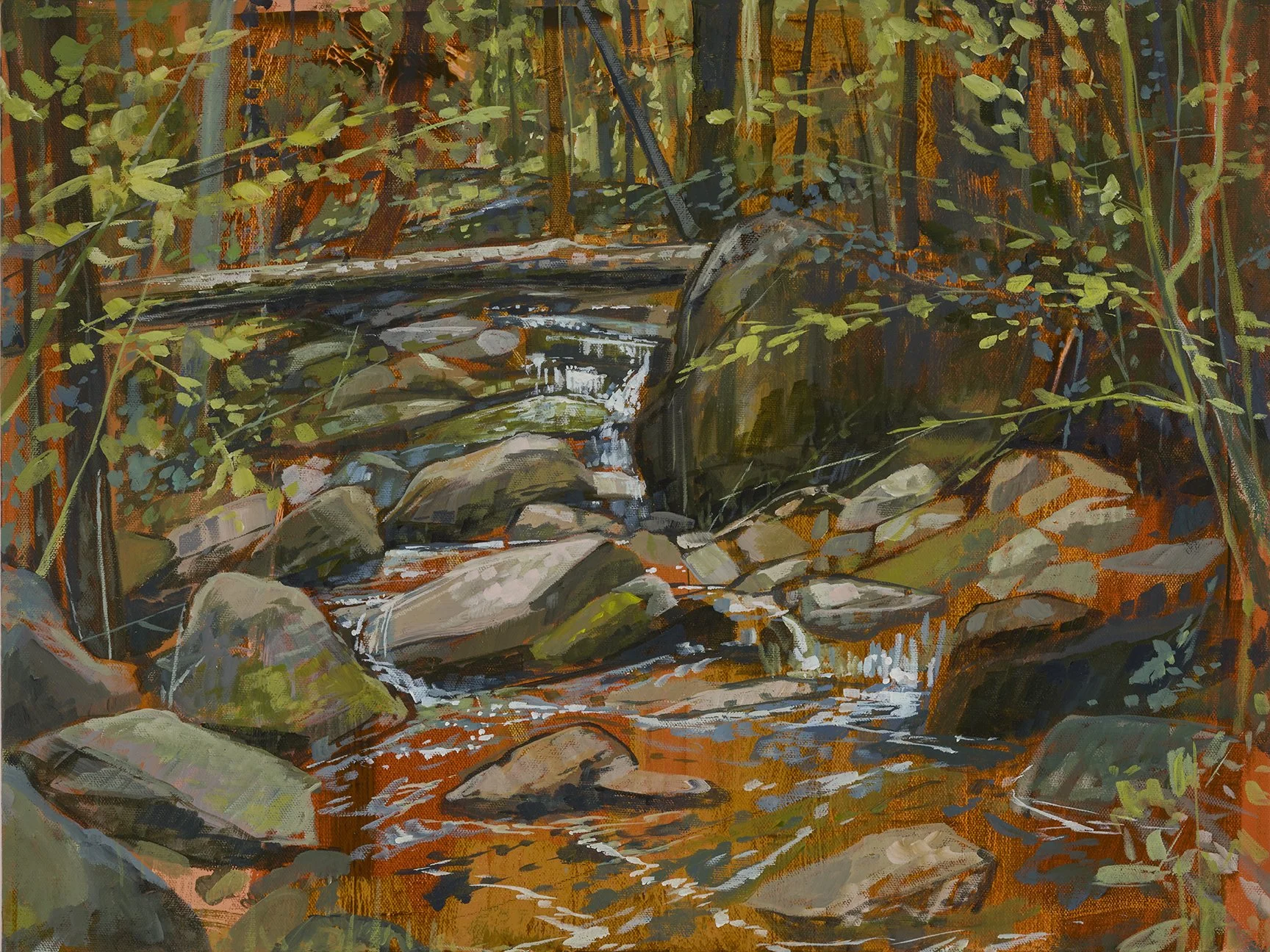
Forest Playground
Acrylic on canvas
18 x 24 inches
(SOLD)
Roan Legends
Just down the mountain from the world’s largest rhododendron garden lies the Little Cove Creek Preserve in eastern Tennessee. For those who may not know, eastern Tennessee is one of the last places to get a nice chunk of green forest land for a reasonable price. One thing that makes the mountains in any part of the country largely undeveloped is the elevated landscape. The steep hills, boulders, and sheer cliffs are hostile to urban development. The valleys that parallel the great rivers are fertile and rich, with dark, nutrient-filled soils, making them well-established family farms.
I always feel a little jealous that my family's history does not play a role here. The planted fields and animal pastures are green and flat and bordered by stone barriers built from the river stones that once filled the basin between mountains. The air is sweet with the smell of manure and livestock, and I feel sad that this is a fading culture and that most of our produce comes from large commercial farms. Nevertheless, there are still families throughout these mountains with generations of agricultural tradition, and they are proud of that heritage and carry on as always, getting the chores done.
As we make our way to our weekend’s destination, we drive past the last homestead that grows Christmas trees. The Little Cove Creek Preserve has a discreet entrance along a country lane, and we drive right past it. We drive straight up to a house where a part-time Christmas tree farmer happily gives us old-school country directions of “down the gravel road by that small post where a sign used to be . . . You won’t get cell service here . . . Careful, it's easy to miss.”
Of course, we miss it again, and I don't know where the hell this road is until—here he comes driving down to find us, instinctively knowing we would need his persistent guidance. Southern hospitality.
I compliment him on his farm, and he claims the place as his side hustle, reminding me that it is 2026, and rarely is a small farm the sole source of anyone's income.
We snake our way down a shaded, little valley logging road toward our cabin. Beside the lane is a tumbly creek that is full of mossy boulders, stinging nettles, and young, fluorescent green saplings. Along both sides of the short drive, we pass many thin game trails that zig-zag across both the road and the creek, on up in between the distant rows of small pine trees.
We pass a washed-out asphalt roadway that is evidence of Hurricane Helene’s fury, and we journey on until we find the new, freshly-built bridge. A quick couple turns of the combination lock, a short drive around an old wooden barn, and we reach our lodging.
We find a charismatic country house recently renovated, with everything you need for a cozy stay.
The next morning we wake up with the windows open, and a fresh breeze blows across our faces. The four of us have a light breakfast, put our boots on, and start the day's journey.
Behind the cabin is a field full of milkweed and stalky thistle. The abundance of insects and birds is prevalent. With the massive decline of both of these animal groups worldwide, it is refreshing to see this re-established habitat drawing new life to the area. This is one of the initiatives that SAHC successfully facilitates.
This spot is also an obvious wildlife corridor, as the end of the conservancy's property runs into the much grander state park, and this gives the larger roaming species a way to get from one habitat to another without running across developed communities.
In fact, as we march up the mountain, we stop several times to watch does and fawns bounce and leap through the tall grass or across the small creeks that flank the field on both sides.
The trail to the top is a thin little foot path, and the saplings and vines reclaim their territory at many points along the way. My children are enthusiastic for our pilgrimage this morning, and they stray to explore the wet, marshy lowlands.
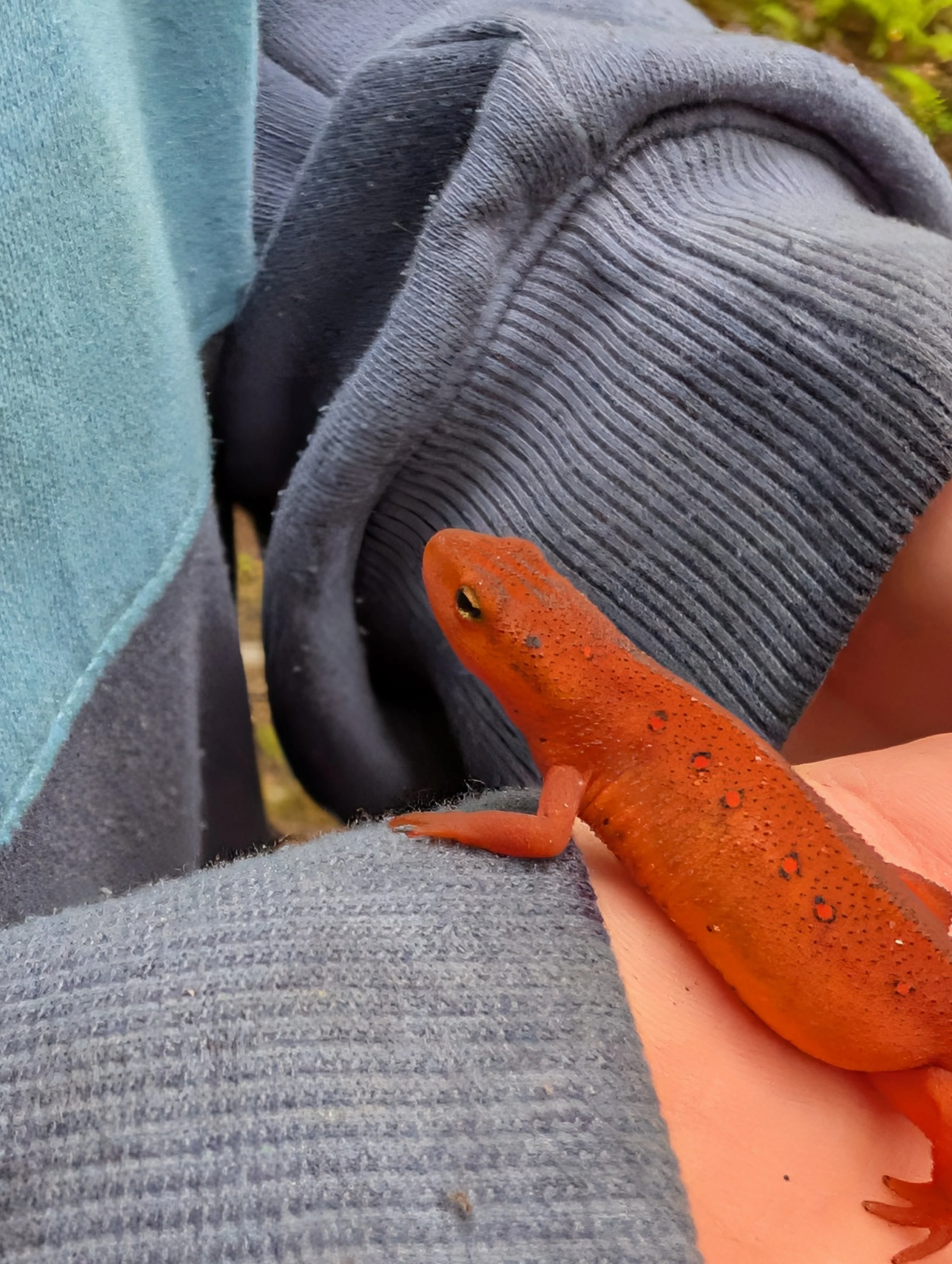
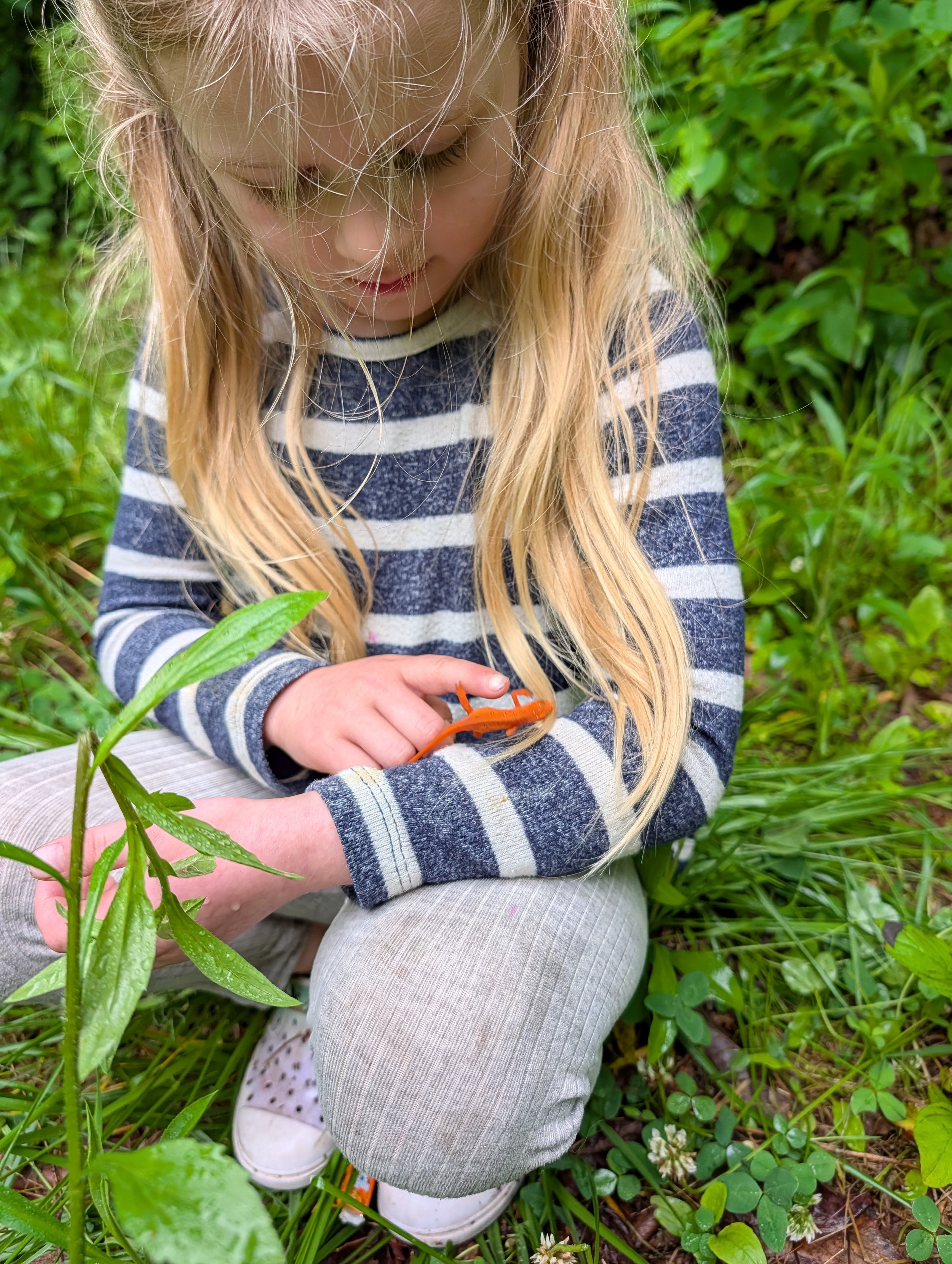
With a fire-orange salamander in hand, Shiloh comes to share her discovery while Henry washes his legs in the creek, and the cold, fresh water acts as a natural antidote to the patches of stinging nettles that hamper his progress.
Stinging nettles have been abundant around most of the creeks we have explored this summer, and we have become used to this ceremony.
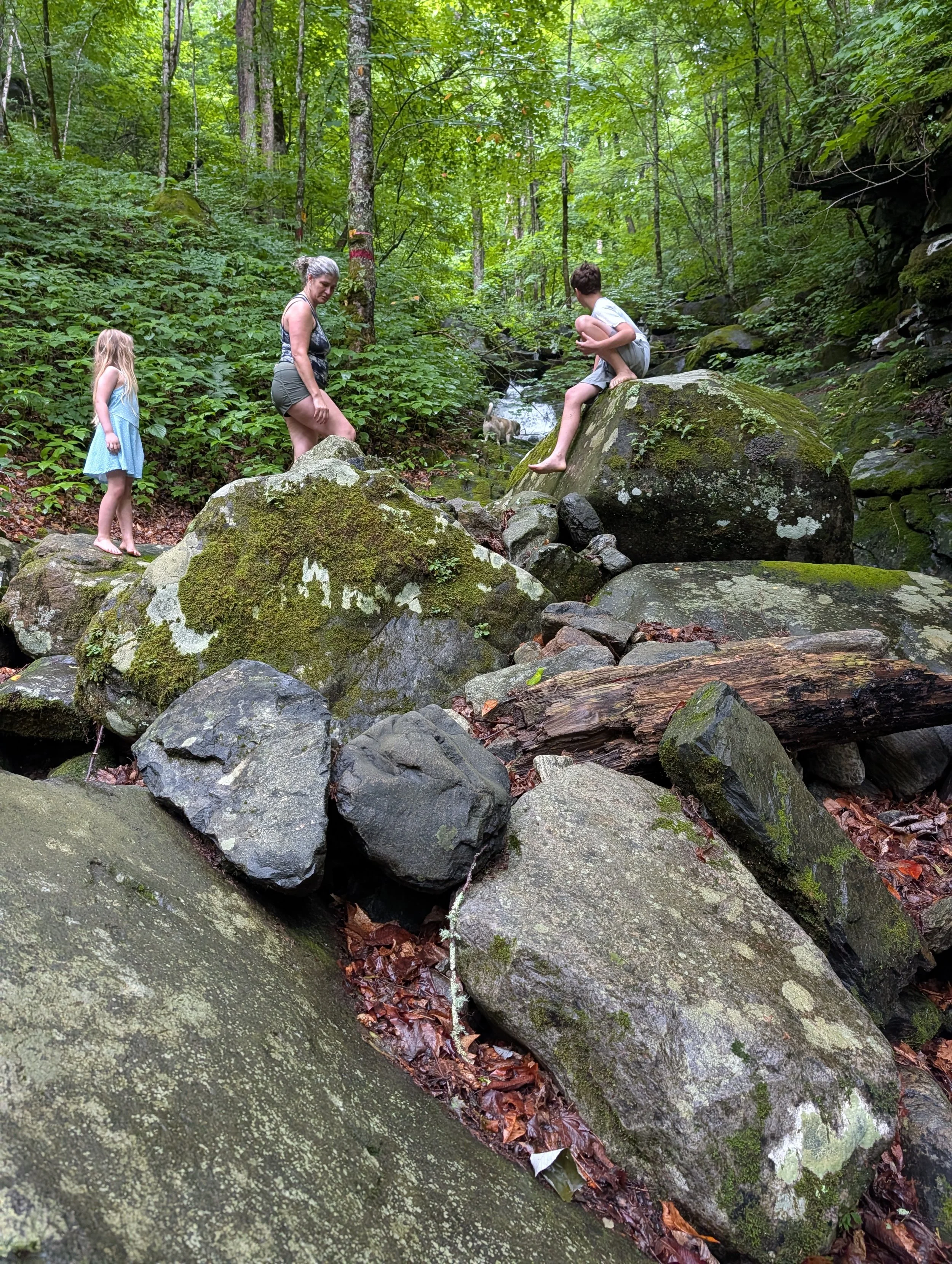
As we come to the set of small waterfalls that is our destination, we find a natural playground that will give us a few hours of fun. The boulders are grand and overshadow the streams that trickle, tumble, and spray through the gullies. Every little pool reveals a new world to explore, and all the native invertebrates are represented.
Of course, the crawdads and salamanders scurry from every other overturned stone, and the stone fly nymphs cling to the glossy surfaces of the river stone underbellies. I like to look at the little houses the nymphs make called exuvia, and I marvel at the unique little constructions made of tiny pebbles and sticks.
We spend the afternoon hopping and sliding all over the Kelly green rocks and lattice work of timbers that have surrendered themselves to gravity.
These moist wetlands form a perfect habitat that rarely has to contend with human interaction, and we are grateful to have such a pristine landscape to explore.
This place feels like one of the original places, and I let my consciousness melt into connection with the land and life.
There is a tranquil force of the living source here and a vibration of fertile abundance pulses through the body if you have the patience to sit with it and surrender your ego to the spirit of the forest.
South Yellow Mountain Preserve
Mitchell/Avery County
North Carolina
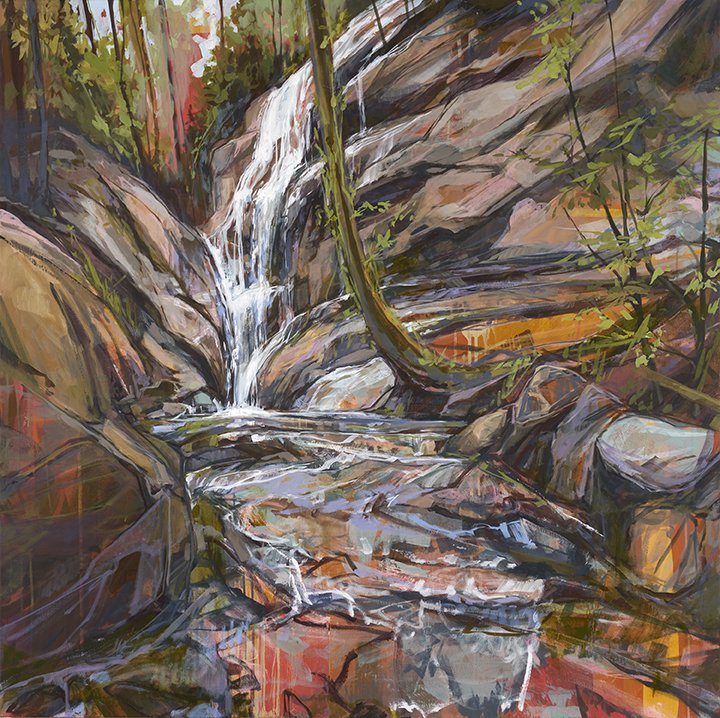
Appalachian Athena
Acrylic on canvas
48 x 48 inches
(SOLD)
Gouge Creek Falls~
Appalachian Athena
The South Yellow Mountain Preserve near Spruce Pine, North Carolina, is a magnificent, large tract of preserved heaven on earth. The scale of this preserve makes exploration feel daunting, and we actually had to drive thirty minutes or so between points of interest for this project.
The land here feels truly ancient. Lush vegetation abounds in the moist, fertile soil. Trickling spring-fed water channels vein through the contours of the steep hills while small streams cut along the low troughs beside the paths.
We visited two waterfalls in this leg of our journey, and both were majestic and strangely alive with individual personalities. One was flanked by a large, cavernous mica mine; the other by a tall, sheer cliff face that rose hundreds of feet tall.
The first waterfall presents itself very quickly along the hiker's pilgrimage. As you make a sharp turn through a patch of thick rhododendron, it is suddenly there before you. It stands thirty or forty feet tall and cuts straight down into a small pool. White streams bounce over a few rocky outcroppings before snaking their way into a final plunge at the bottom of the falls.
I find stones that range from violet, pink, orange, golden ochre, and cool sienna all the way across the spectrum to indigo blue-grays. Olive and lime-green mosses paint every variety of stone in slick, slimy sheets that grow thick within the crevices.
It is dark down here. The creek is steeply flanked on both sides by thick, vine-covered clay banks and granite stone walls. We take off our shoes and picnic here while our feet joyfully refresh themselves in the cool, pure stream.
As we sit, the light dances among the leaves and through the underbrush. Beams break through the canopy to highlight the crystal-clear cascade of the waterfall before us. This space feels spiritual and mythological. When the sunlight bathes it, the waterfall feels like a doorway, or perhaps a birthplace, for an ancient forgotten goddess.
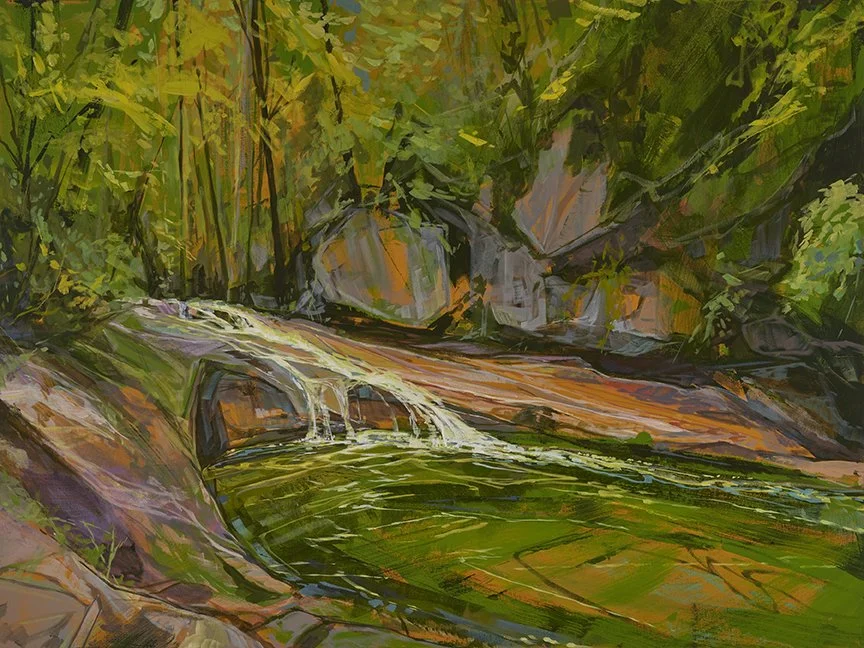
Emerald Pool
Acrylic on canvas
36 x 48 inches
Grand Emerald Pool- Beaver Creek
The second waterfall we visit is a low, horizontal, crescent-moon-shaped outcrop, pitted with basketball-sized chambers that have been slowly carved into the stone over millennia. Standing here, I feel surrounded by the echoes of a vanished civilization. In my mind's eye, I see Native people working among these boulders and along the rock face before me. I imagine deerskin garments being washed in the water-filled hollows and hydraulically carved pits used to pound acorns into flour and paste.
The forest opens here, filling the basin with warmth and sunlight. You can almost hear Indigenous children splashing, wrestling, and leaping through the grand emerald pool that stretches across the long, oval-shaped basin. The water begins as a deep emerald green against the pink rock wall before fading into a sandy ochre shallows. Cerulean ripples catch the current, mirroring the blue sky overhead.
From the basin, the water narrows into a small plunging creek that winds its way toward the town of Spruce Pine. High above this oasis lies the town's reservoir, and the South Yellow Mountain Preserve safeguards this vital watershed through its protected forests and conserved boundaries.
Life flourishes here. The preserve teems with aquatic invertebrates, reptiles, salamanders, native trout, small mammals, deer, and black bears.
As we leave the crescent basin I look down and spy the tip of a quartz projectile point. I pick up the arrowhead and hand it to the steward of this particular easement, Park. It feels like a symbolic gesture of gratitude for this wonderful gift.
Big Yellow Mountain
Highlands of Roan
Avery County, North Carolina
Mountain Bald
Acrylic on canvas
36 x 72 in
(SOLD).
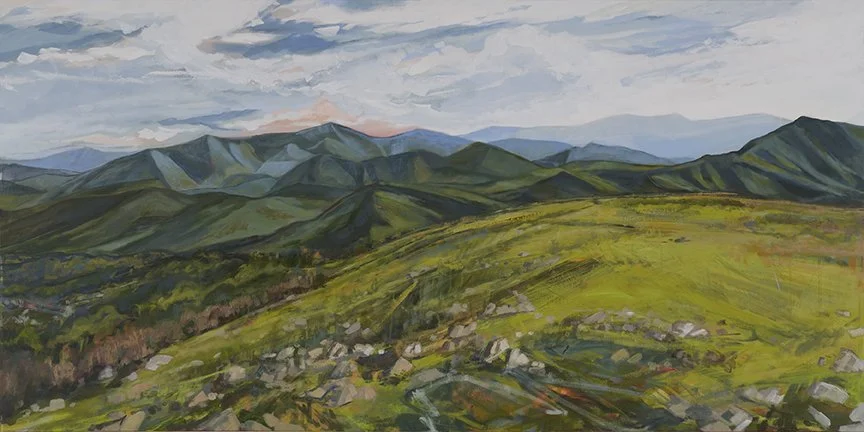
Big Yellow Mountain
They say these Appalachian peaks are the world's oldest mountains, and if that is true then Big Yellow seems like the oldest of the old. The summit lays gently against the sky, rather than piercing it. It is one long bolt of grass and granite and every cloud that sweeps by drags a bit of it away, softening its edges. It is worn smooth. Here is the end of the last ice age, the wild realm of mammoths and tigers and prehistoric ferns. I hope you get to stand here the way I have done and get to feel all of this.
In 1974 SAHC and The Nature Conservancy combined forces to buy this preserve from the Avery family. The Averys had owned it since taking title through a King's grant that used to sit, framed, on the mantle of the family home-place down on the North Toe River. But over the years the family had dispersed, with cousins in Maryland, others in Kentucky and Texas. They were willing to sell.
At the time ski resorts and golf clubs were coming into the county. Beech Mountain, Sugar Mountain. Developers hawking views and splendor eyed this stunning place. But the heirs sold to the conservancies instead.
And nearly every year now there is an Avery family reunion on top of Big Yellow. Sometimes the wind nearly blows the descendants off the mountain, but other times the grasses stand perfectly still in a dreamy summer haze. Dozens of varieties of bees take the opportunity to visit each of the billion flowers- the yarrow, the three-toothed cinquefoil and the groundsel. And the cloud giants gather over the mighty Black Mountains, close enough to touch. And the visitors feel both close to heaven and wedded to the earth.
It's not easy to get here; it's a long climb up the flank of the mountain, through ancient stands of birch and maple. It's also not easy to leave here.
~ Jay Erskine Leutze
Senior Advisor to the SAHC Board
Reminders
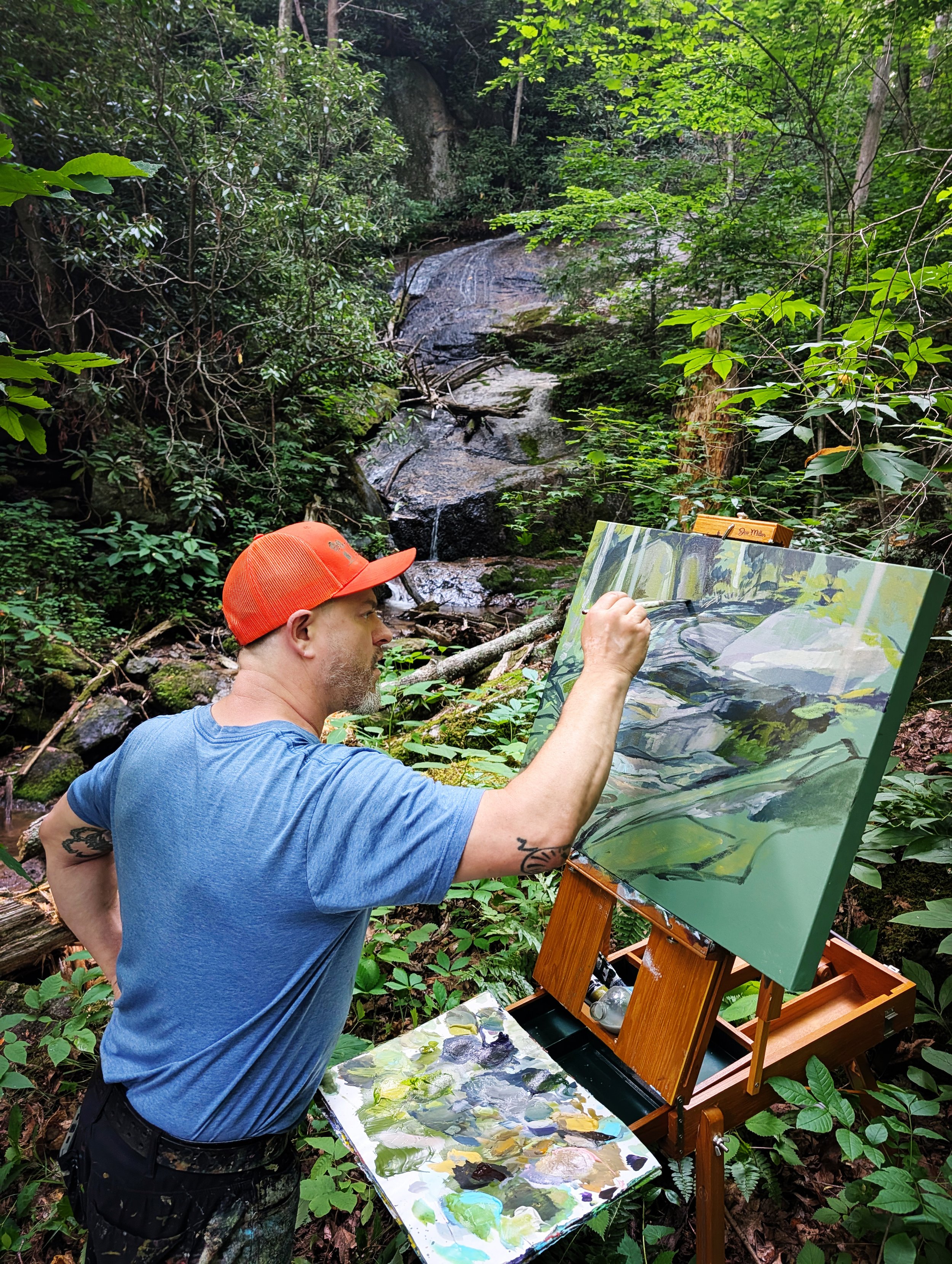
Painting in nature is about as stimulating as it can get for a 2-D artist. Photography in my creation process has been invaluable. Large-scale pieces that force a viewer to be completely immersed in the experience are large and unwieldy and need to be done in a studio setting. I can bring an experience back with me and work from the photographs for remembering perspective and scale. Details like source of light and direction of shadows have been accurately recorded.
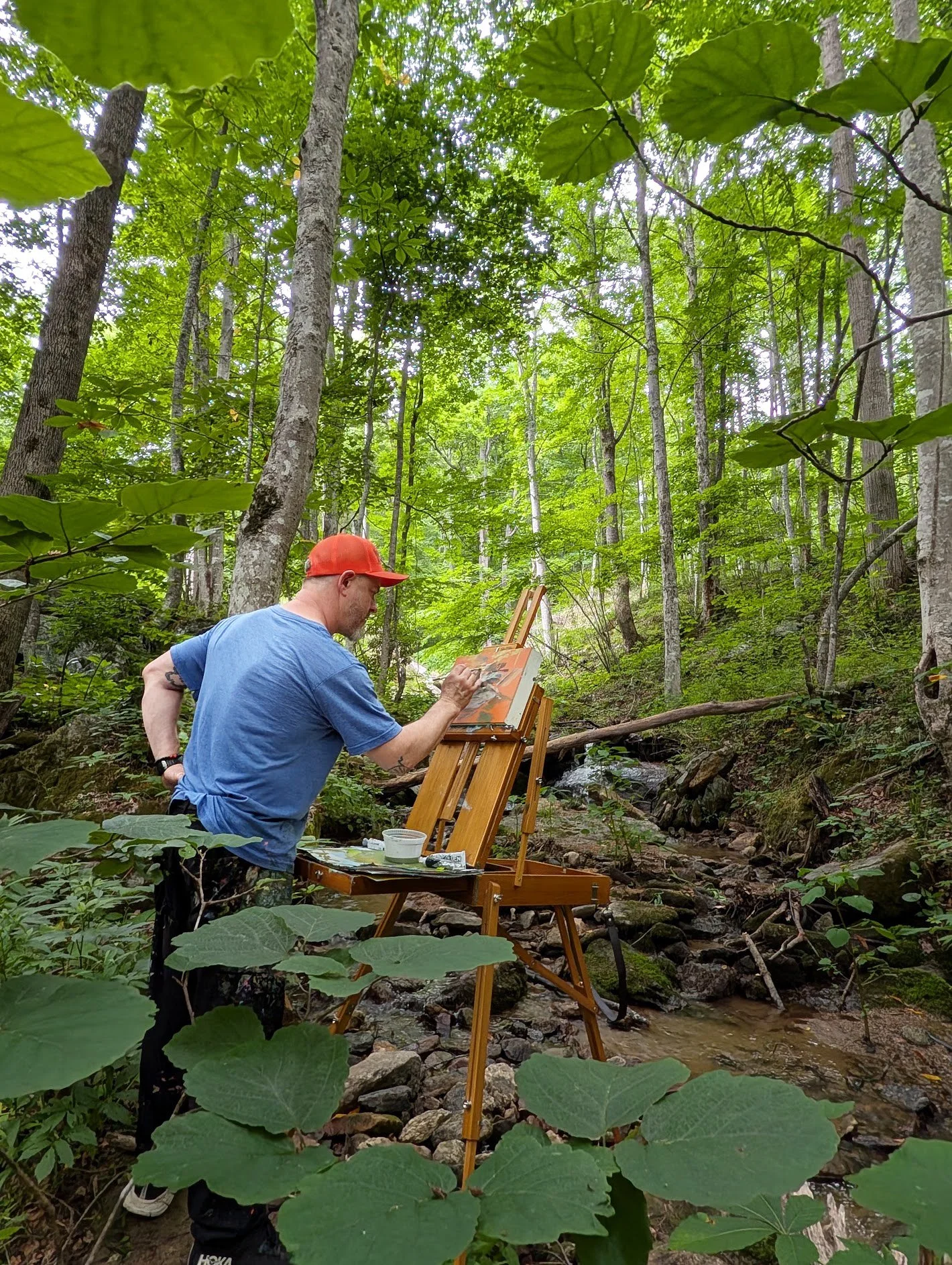
Painting “plein air,” or painting in the field, with an easel and small canvas is so much more. While I consider myself an abstract expressionist when I paint from imagination and inner dialogue, I paint landscapes like an abstract impressionist.
When painting landscapes, I start off with a completely gestural abstract foundation and then form the landscape painting, adding layer after layer of the literal information that I see in front of me. In my pieces, the landscape is presented accurately and could easily be identified by someone familiar with the area; however, the true strength of my technique lies in the energy captured and the intuitive breakdown of the experience. They are not pictures of a place but are more the capture of an experience.
The abstract layers that set the premise are influenced by the moving light of the sun, the rustle of leaves, and the rolling movement of the canopy overhead. The temperature plays a role, and the colors can lean warm or cool. The visual movement captured could be static or motivated.
In the middle stages of the evolution, the broader elements are established and choices of economy are crucial. Whatever gets painted over is gone unless scraping or wiping brings parts of it back.
Lessons
The value of being out in nature is immeasurable. As we made our pilgrimage through lands preserved by The Southern Appalachian Highlands Conservancy this summer, I have been reminded again and again of the personal advantages of being out in nature. I am lucky enough to have been raised in a family where fresh air and outdoor activity were prized and seen as necessary. I come from the generation of “go outside and play” and “be back before dark”.
As our lives become filled with screen time and artificial intelligence, the need for self-reflection and the surrender of ego is more necessary than ever before. I mourn the times when one could drive to the store and be alone with one’s thoughts without being chained to the technologies that follow us from dawn till dusk. My kids will not have that experience unless we force it on them and there seems to be a kind of capitulation they must endure to find intimacy with nature.
All parents who raise children in the age of screens can testify to the negative reaction that overcomes a child after they finally put a digital device down. Oppositely, a child who has spent a day in nature has a calm and contemplative energy about them. I think that it is crucial to provide this escape at a young age and that this is a priceless gift that can be used throughout their entire lifetime.
The SAHC and organizations like them are an investment for society. Politics aside, grassroots conservancies provide a buffer against the exploitation of our natural environments. Private investment in these groups is one place that I see the value of capitalism and what it can potentially afford us.
We are citizens of a country where national parks and other government conservation sites have been woven into the fabric of our collective legacy. We have set the standard for recognizing and protecting beautiful and geographically significant locations and we must speak out, invest, and lobby for these investments.
I hope this project, “Appalachian Sanctuary”, brings light to SAHC and other conservancies that function on a smaller, yet productive scale.
Scrap Book
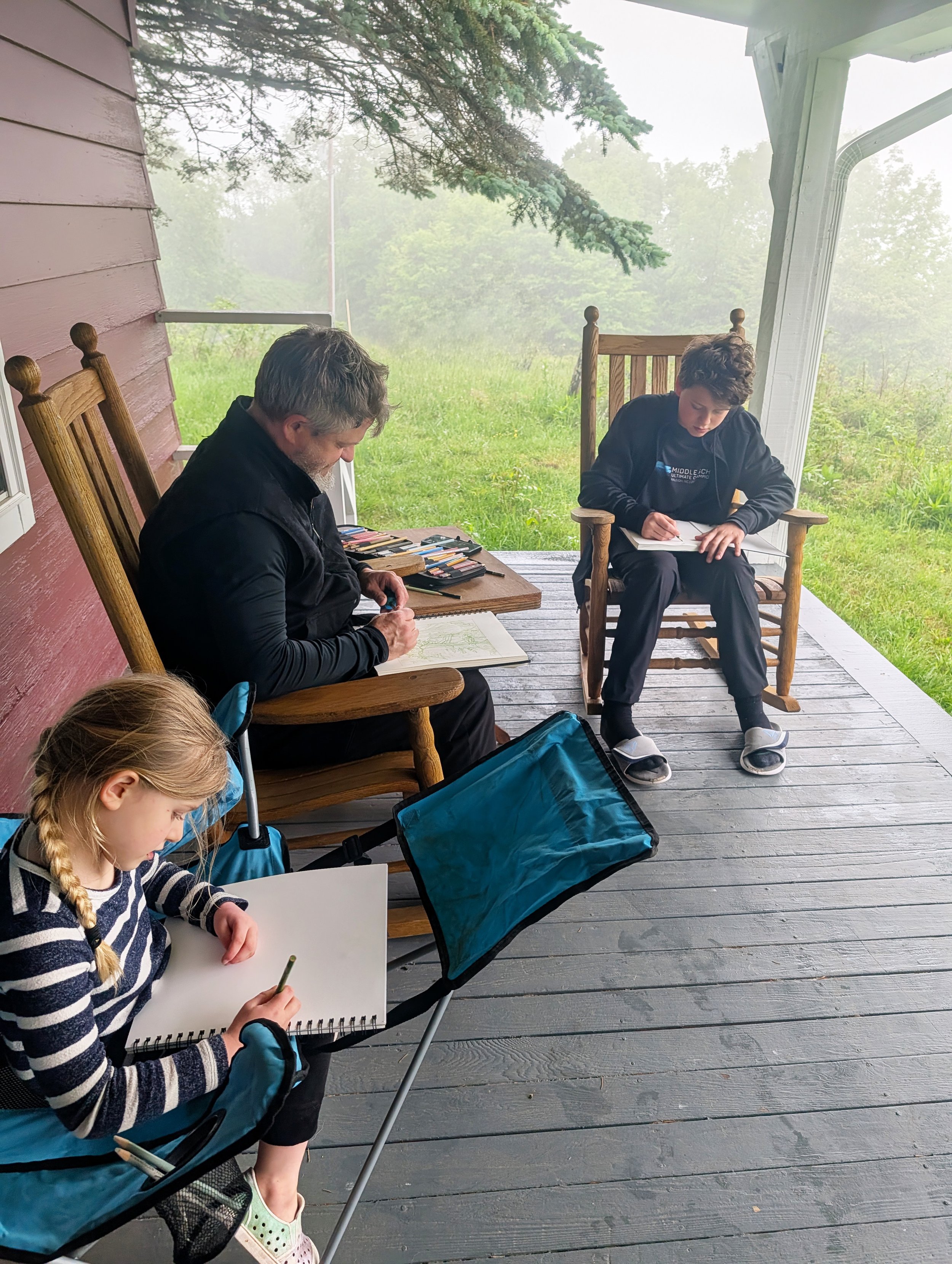
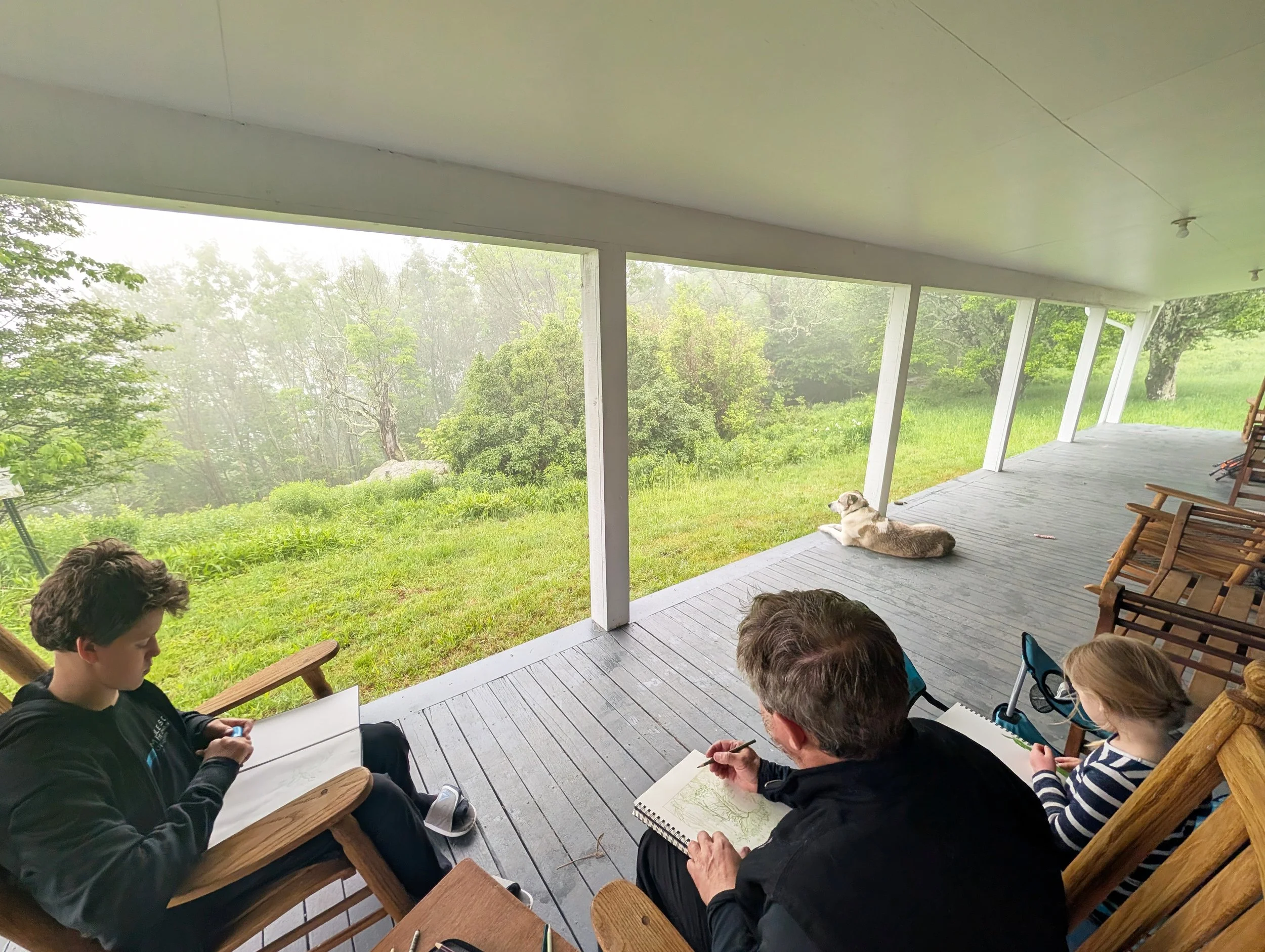
Shiloh, Henry, and Dad sketching on the porch
of the Bird House on a rainy afternoon
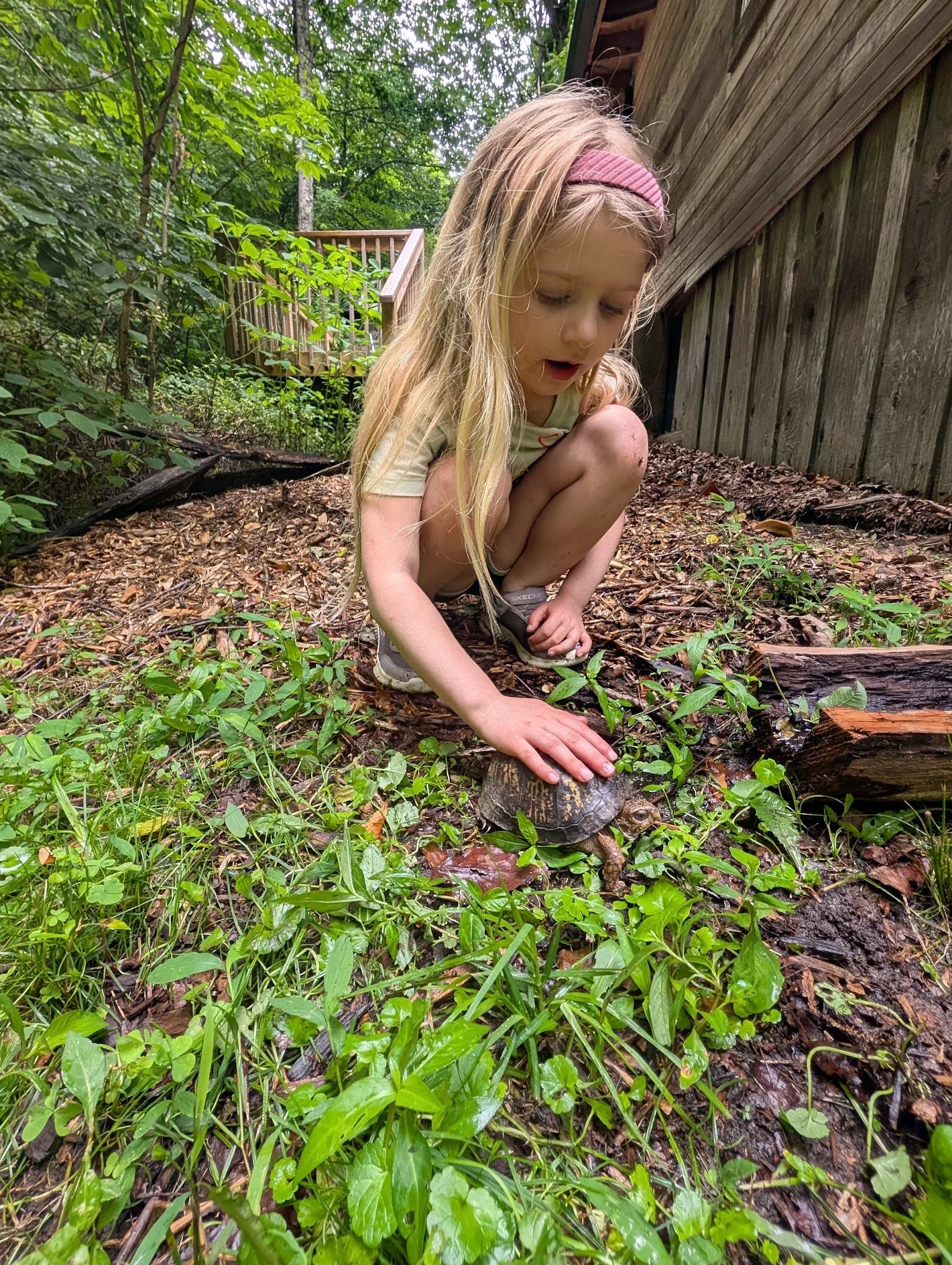
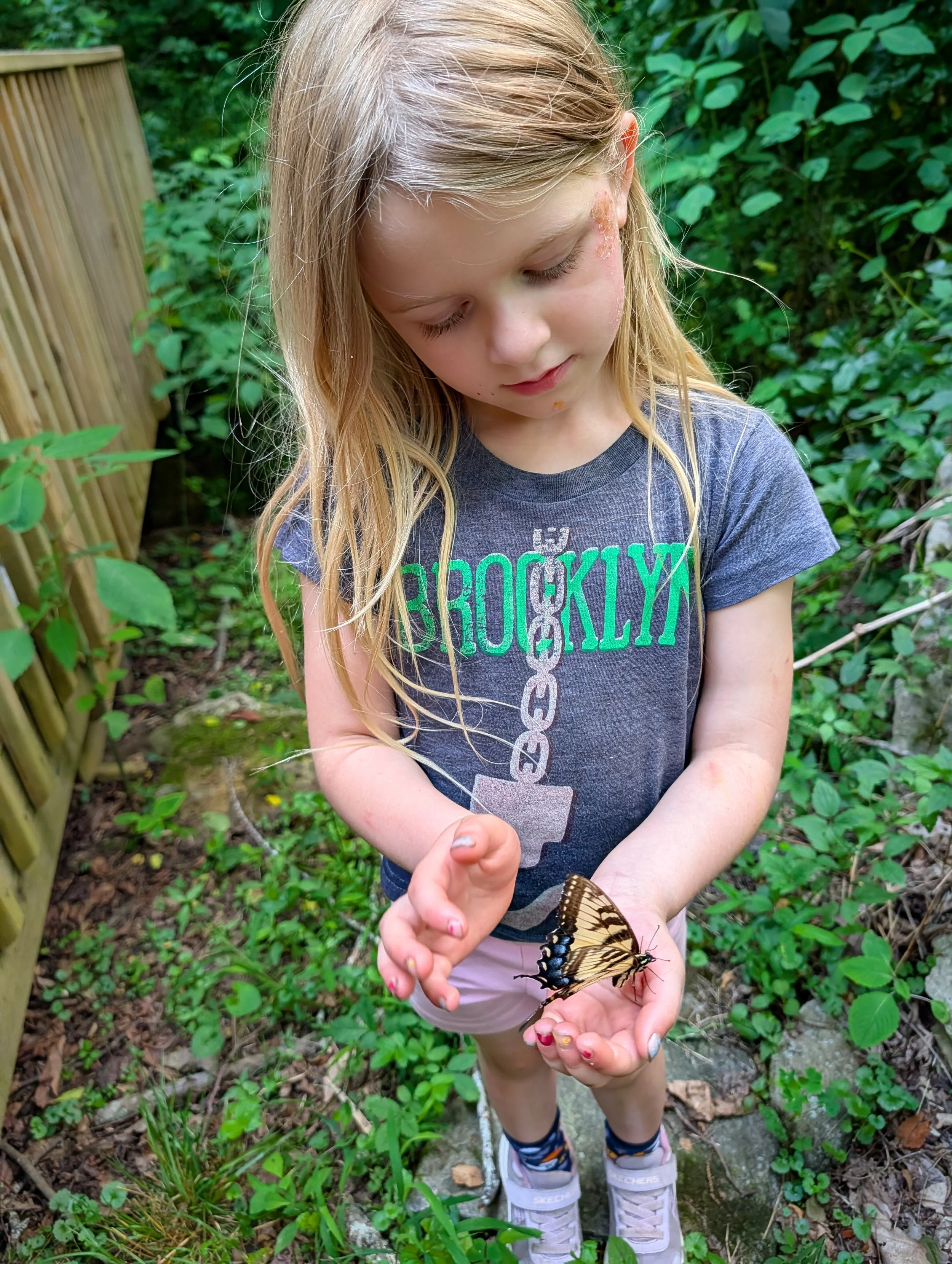
The Gift (The Ideal Wild) by Jamie Hammond
The most natural thing to place in a child’s hand
Is treasure.
The wonder with which they experience life:
Wide-eyed,
Wider visioned.
There is a pull to give them the world:
To give them the universe.
The only thing one can place in that tiny palm
Is exquisite
Is priceless
Is awesome
Is natural.
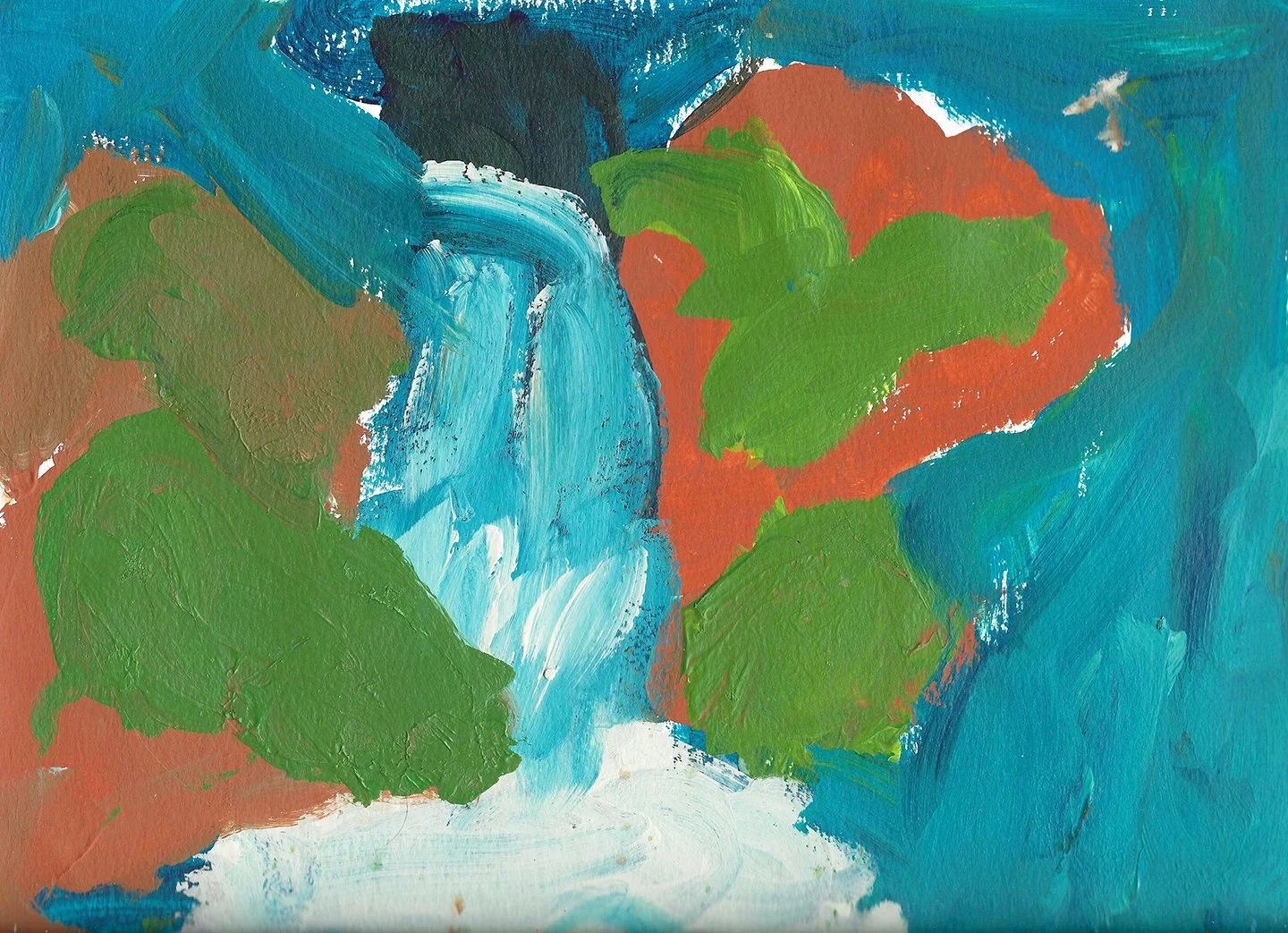
Shiloh’s painting of a waterfall
The first European settlers in Western North Carolina were likely as awestruck as we were to walk into these magical forests. In the Old Country, forests had been largely privatized, and those without title lacked permission to wander in the shade of old growth, acquire their dinners, or secure wood for their fires.
Here, in this new, but familiar-feeling land, there was a hint of a promise of possession. It makes sense that they would fight like hell to try to keep what they thought could possibly belong to them and their progeny . . . forever. Through the lens of European rights and land ownership, they could secure a future. Their own farm. They could marry the mountain’s future to their own. They would carefully choose and carry stones, one by one, from the river to create walls to mark their family’s land. The fruit trees and nut trees, both native and introduced, would enrich their diets. The flowers planted close to the house would make mother smile and increase their pride in their homes. The animals they honored, studied, and harvested to keep themselves alive.
Who were these people and which steps of mine match theirs?
This conservation project feels like it honors the human story right alongside nature’s. Families can ensure that their ancestors’ hopes stay rooted in the soil they turned with their dreams. The land won’t be taken over by this century’s noble classes: big business and subdivided, paved communities that defy and challenge nature’s course. Instead, the land will continue to be seeded with love, though their structures may shift, and their family plots will be treated with reverence, and their stories will be told. This may be the best of human endeavor.
Please join us to support these conservation efforts. Their work is for all of us.
~Jamie Hammond
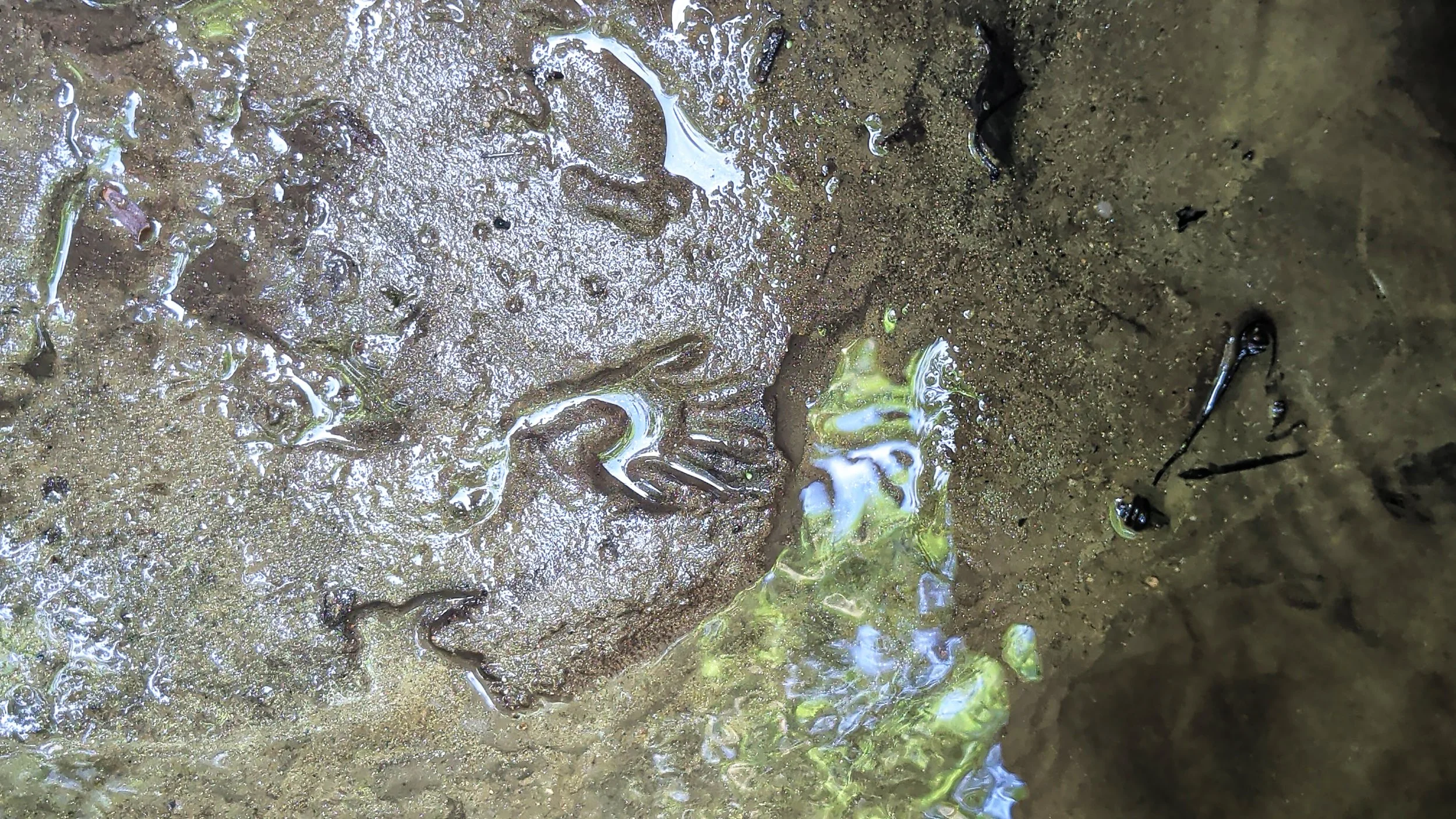
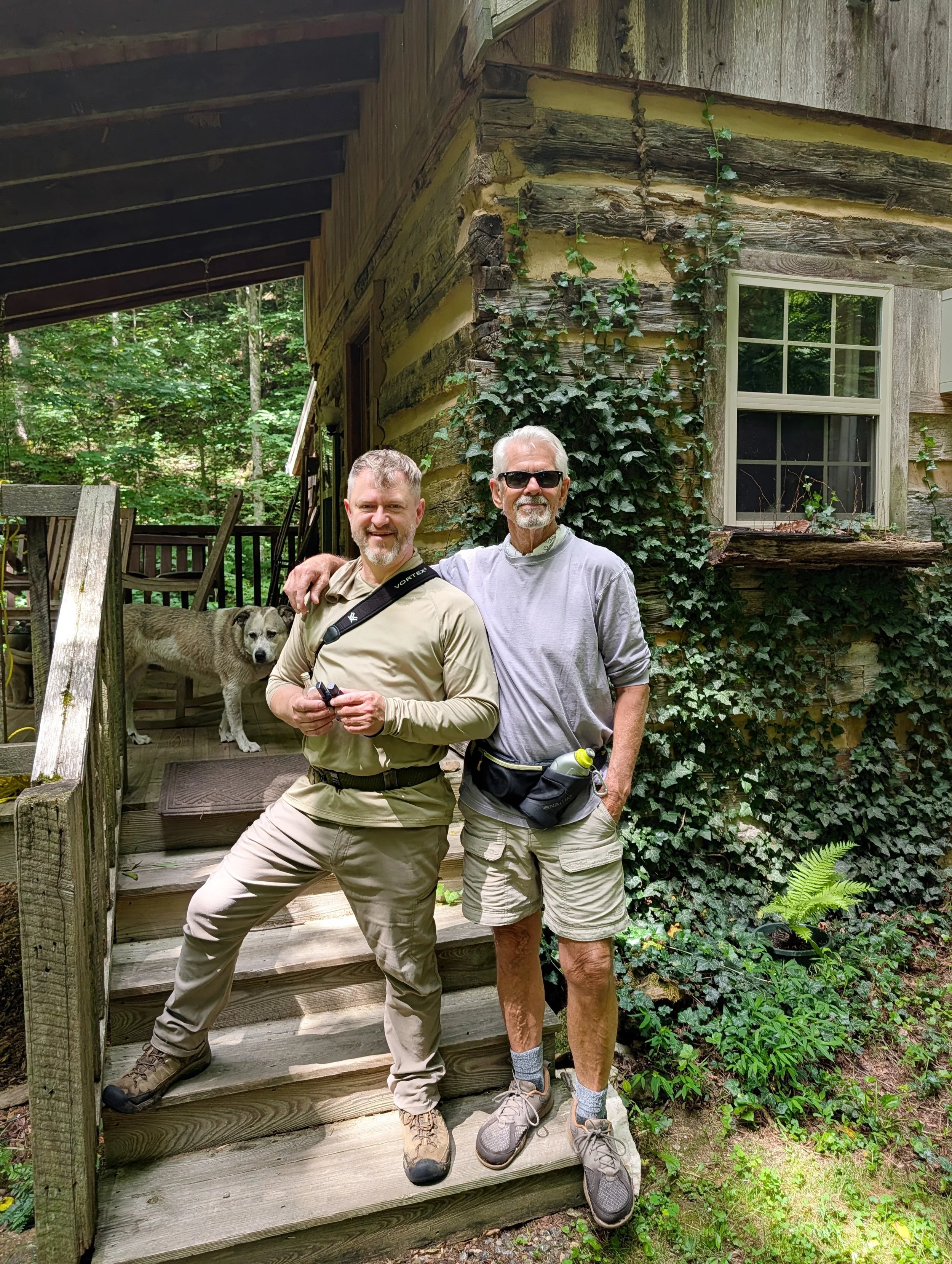
My little buddies, the black snakes, have been cruising around the greenhouse, kind of pushing and shoving things around and knocking stuff off the walls. I think there’s some kind of snake party going on at night that I’m not aware of.
I have found nature to be the ultimate teacher in life. What is the lesson? It teaches you how to be. How to be in the moment as it is, unconditionally. In my morning ritual of acknowledging, in gratitude, all that surrounds me, I offer up my consciousness to the universe as a place where it can express itself. It never fails to amaze me with what it brings to my awareness.
Bill Spears